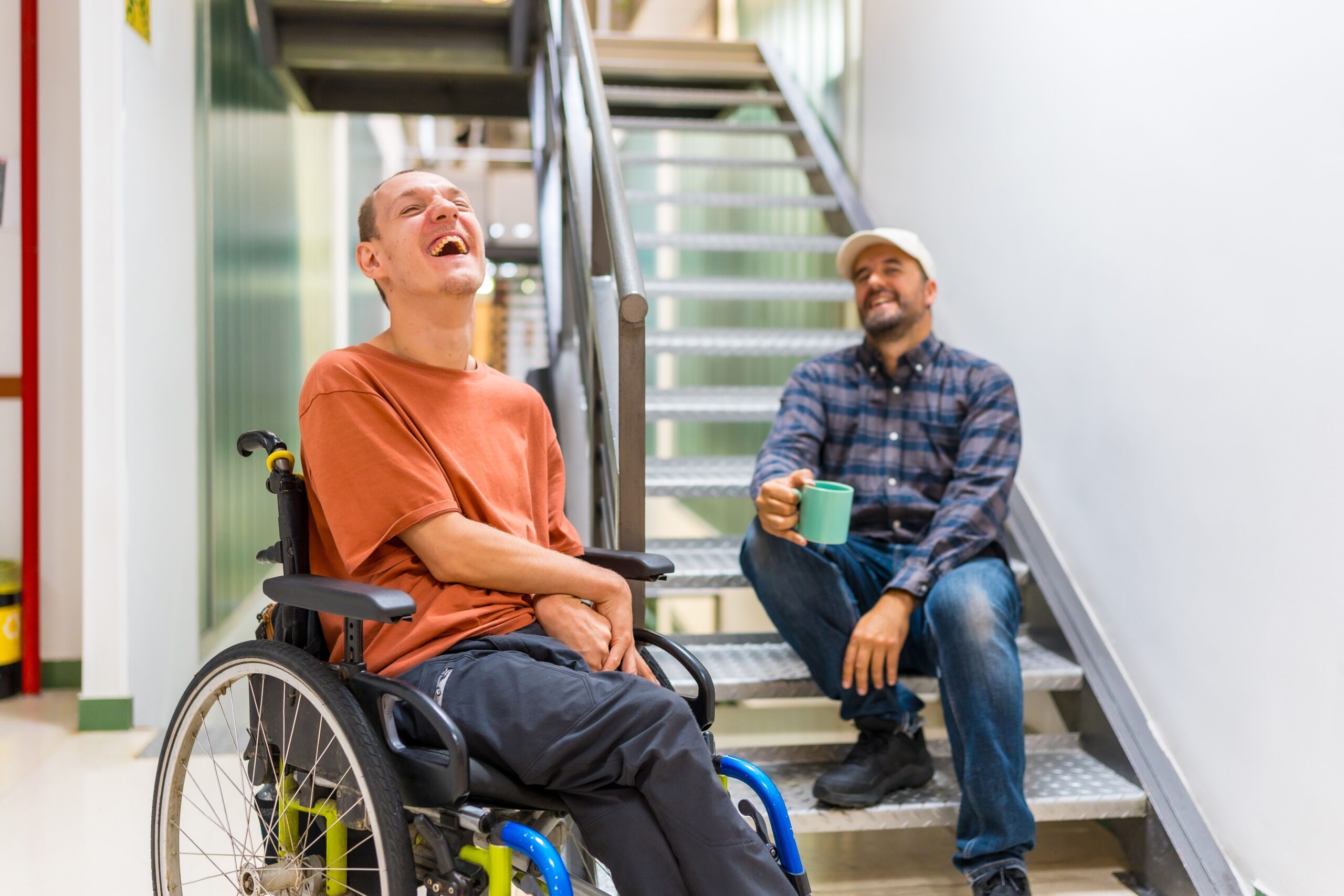

When seeking comprehensive support for an individual with Intellectual and Developmental Disabilities (IDD), families often encounter various therapeutic approaches. Two of the most effective, yet frequently confused, interventions are Behavior Skills Training (BST) vs Social Skills Training (SST). 

While both are powerful tools used in behavioral health interventions, they target different outcomes and employ distinct methodologies. Understanding the nuances between these two techniques is essential for choosing the right path to long-term success, independence, and social integration. This guide breaks down the core differences of Behavior Skills Training vs Social Skills Training, the target goals, and how we utilize both at DDRC to support individuals across the lifespan. 

What Exactly is Behavior Skills Training vs Social Skills Training?

The primary difference between Behavior Skills Training vs Social Skills Training lies in the nature of the skills taught: BST targets observable, discrete actions, while SST targets nuanced, reciprocal social competencies. 

What is Behavior Skills Training (BST)? 

Behavior Skills Training (BST) is a highly structured, four-step, evidence-based instructional method rooted in Applied Behavior Analysis (ABA) principles. Its primary focus is teaching complex, observable, and measurable behaviors that are essential for safety, independence, or skill generalization. 

BST is focused on the How: It aims to teach an individual how to perform a specific action by demonstrating, guiding, and reinforcing the desired behavior until mastery is achieved. 

The methodology is standardized and includes four critical components: 

  1. Instruction: The therapist clearly explains the steps of the skill to the learner. 
  1. Modeling: The therapist physically demonstrates the correct way to perform the skill. 
  1. Rehearsal (Role-Play): The learner practices the skill in a controlled, safe environment. 
  1. Feedback: The therapist provides immediate, specific, and constructive reinforcement or correction. 

Example Skills Taught Using BST: 

  • Fire or weather safety procedures 
  • Appropriate job interview conduct or workplace etiquette 
  • Complex self-care and hygiene routines 
  • Functional communication skills (e.g., asking for help) 

BST is essential for building the foundational skills needed for independent living, making it a cornerstone for both youth ABA therapy and ABA therapy for adults at DDRC. 

What is Social Skills Training (SST)? 

Social Skills Training (SST) is a broader therapeutic approach aimed at improving an individual’s ability to navigate and succeed in social interactions, understand social cues, and manage emotional responses in complex or ambiguous situations. 

SST is focused on the When and Why: It helps the individual understand the context and purpose of social behaviors, emphasizing reciprocal interaction and relationship building. 

Key Goals of SST: 

  • Improving conversation initiation, maintenance, and turn-taking. 
  • Understanding and responding appropriately to non-verbal communication (body language, tone of voice). 
  • Developing skills for emotional regulation during conflict or frustration. 
  • Improving perspective-taking and empathy. 

SST is typically practiced in group settings or through simulated real-world scenarios to allow the individual to apply skills in a dynamic environment, fostering the flexibility needed for real-life social success. 

Comparing Behavior Skills Training vs Social Skills Training 

Having defined the core components of both interventions, it’s crucial to clarify how they differ in practice. While both are critical to an individual’s growth, they target success in distinct ways. The following table provides a side-by-side comparison of Behavior Skills Training vs Social Skills Training, detailing the intended goals, primary settings, and specific techniques utilized in each approach for individuals with IDD. 

Feature Behavior Skills Training (BST) Social Skills Training (SST) 
Primary Goal Teaching discrete, observable actions (Safety, Self-Care, Vocational Skills). Teaching nuanced, relational competencies (Communication, Conflict Resolution, Peer Interaction). 
Method Direct instruction, modeling, intense practice, and immediate feedback (Four-step sequence). Role-playing, group discussion, emotional identification, and perspective-taking exercises. 
Skill Type Motor Skills (How to tie a shoe), Safety Skills (How to call 911), and Procedural Skills. Relational Skills (How to understand sarcasm), Emotional Management (Handling peer rejection). 
Learning Setting Often begins in a controlled, one-on-one, or highly supervised environment. Primarily conducted in group settings or simulated social environments for generalization. 
Example Target Successfully following the steps of a recipe. Successfully participating in a group conversation at a party. 

Are Both Behavior Skills Training vs Social Skills Training Important to IDD? 

Yes, absolutely. For individuals with IDD, these two approaches are not mutually exclusive; they are often used in tandem to create a comprehensive and highly effective support system. 

  • BST creates the foundation: It ensures the individual has the concrete, foundational skills (e.g., clear communication, self-management) necessary to perform the social behavior. For example, BST might teach the skill of maintaining eye contact or shaking a hand. 
  • SST provides the context: It allows the individual to practice using those foundation skills in real-life, group interactions, teaching them when to use eye contact and how to adapt their greeting based on the social setting. 

This integrated approach is crucial for promoting growth, independence, and community participation across all age groups. Whether the individual is preparing for high school transition or seeking vocational stability, a blend of Behavior Skills Training vs Social Skills Training provides the most robust path forward. 

BST and Independence Across the Lifespan 

For adults, the skills taught through BST directly translate to increased independence. Our programs for adults heavily utilize this approach to teach: 

  • Vocational Skills: Punctuality, task sequencing, and professional communication. 
  • Life Skills: Budgeting, meal preparation, and utilizing public transportation. 

These skills are often required for successful independent living, housing, and vocational placements. 

SST and Quality of Life 

For youth and teens, proficiency in social skills is directly tied to mental health and quality of life. Our youth ABA therapy programs integrate SST to help clients: 

  • Build and maintain meaningful friendships. 
  • Resolve conflicts with peers and siblings appropriately. 
  • Reduce anxiety by improving the ability to predict and respond to social situations. 

DDRC’s Integrated Approach to Behavioral Health
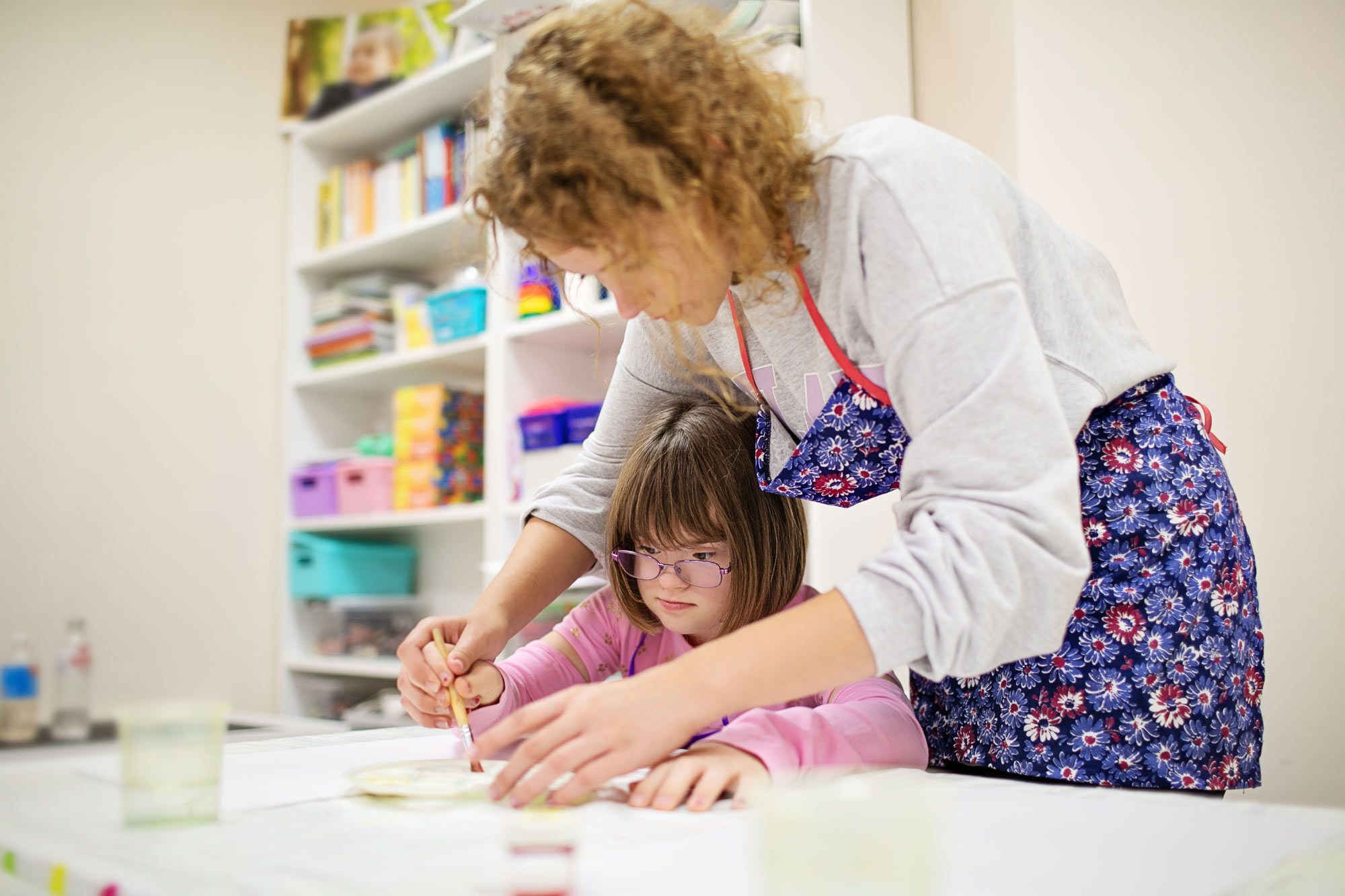
At DDRC, we recognize that support must be highly specialized. Our behavioral health interventions are never one-size-fits-all, and we approach the determination of Behavior Skills Training vs Social Skills Training needs through thorough, compassionate assessment. 

Customized Training and Family Support 

We perform comprehensive assessments to determine if the primary need is foundational skill acquisition (BST) or relational competency (SST). This allows us to tailor the frequency and intensity of instruction to the individual’s unique learning profile. 

  • Training Consistency: Effective behavioral support requires generalization—the ability to use a skill outside of the therapy room. That’s why we emphasize family caregiver support for people with autism in our programming. By training caregivers, we ensure consistency and reinforcement of skills at home and in the community. 
  • Collaborative Care: Our behavioral health specialists collaborate closely with our intellectual disability psychiatry team. This critical coordination ensures that all support—behavioral, social, and medical—is aligned, creating a cohesive and effective treatment plan. 

By providing expertise across the full spectrum—from structured skill teaching to nuanced social guidance—DDRC ensures that every client receives a personalized and empowering path to success. 

Finding the Right Support with DDRC 

Whether your loved one requires highly structured Behavior Skills Training to achieve vocational independence or nuanced Social Skills Training to build lasting friendships, DDRC offers the integrated expertise you need. 

We are committed to providing effective, evidence-based services that empower individuals with IDD to achieve their highest potential. Contact us today to discuss how our behavioral health interventions can create a personalized and comprehensive plan for success.

IDD child hugging parent

Navigating the world of early intervention can feel overwhelming. If your child (birth to age three) has developmental delays or a medical condition that may lead to a delay, the Individualized Family Service Plan (IFSP) is the single most important document you will encounter. In Colorado, the IFSP serves as a critical, legally binding blueprint that outlines the specific services, resources, and goals designed to support your child and family. This comprehensive guide will walk you through what an individual family service plan is, who qualifies, and how DDRC helps ensure your child receives the precise support outlined in their plan.

What is an Individualized Family Service Plan?

The Individualized Family Service Plan is more than just paperwork; it is a written document developed by a team—including parents, a service coordinator, and professionals—that details a child’s current development, the family’s priorities, and the services needed to achieve specific goals.

Unlike the IEP (Individualized Education Program) for older children, the IFSP is family-centered. It focuses on strengthening the family’s ability to meet the developmental needs of the child within their natural environment (such as the home, daycare, or community settings).

The plan coordinates crucial early intervention therapies, including:

  • Speech-language therapy
  • Physical therapy
  • Occupational therapy
  • Developmental Interventionist
  • Assistive technology services
  • Service coordination
family playing cards with idd child

Who Can an Individualized Family Service Plan Help?

Eligibility for an Individualized Family Service Plan in Colorado is determined through a multi-disciplinary early intervention evaluation. The plan is specifically designed for children from birth up to age three who meet one of the following criteria:

  1. Developmental Delay: The child is experiencing a significant delay in one or more areas of development (cognitive, physical, communication, social-emotional, or adaptive skills).
  2. Established Condition: The child has a diagnosed physical or mental condition (e.g., Down syndrome, certain neurological disorders) that has a high probability of resulting in a developmental delay.
  3. The child is living with a parent with a developmental disability.

Getting an evaluation is the first step toward getting answers. If your child is found eligible, the services are typically provided at no cost to the family, making the individualized family service plan a vital resource.

The 7 Essential Steps of the IFSP Process

The process of securing and implementing your child’s plan is collaborative. Our team helps families navigate the following steps seamlessly:

  1. Referral: The process begins when a parent, doctor, or caregiver contacts a local  Early Intervention Entity or Broker (EI)  like DDRC.
  2. Initial Evaluation: A comprehensive assessment conducted by professionals to confirm eligibility and the child’s current developmental status.
  3. The IFSP Meeting: The core meeting where the family and team collaborate to write the individualized family service plan, focusing on family routines and priorities.
  4. Creating Outcomes: Defining measurable, functional goals that align with what the family wants the child to be able to do.
  5. Selecting Services: Determining the necessary early intervention therapies, including the frequency, intensity, and location of sessions.
  6. Implementation: Services begin focusing on achieving the agreed-upon outcomes within the child’s natural environment.
  7. Review and Transition: The plan is reviewed every six months, and the transition process begins before the child turns three.

Structuring Your Individual Family Service Plan: Outcomes and Goals

The heart of the Individual Family Service Plan lies in its outcomes. They are designed to be functional, measurable, and relevant to the family’s daily routine—a hallmark of quality early intervention services.

  • Functionality: Goals must be something the child or family can use in daily life (e.g., feeding themselves, or integrating into inclusive recreation settings.
  • Measurability: Progress must be easily tracked and objectively reported.
  • Context: Outcomes are based on the family’s routine and environment (e.g., “During playtime, [child] will point to two desired toys…”).

Our service coordinators work diligently to ensure every outcome in your individualized family service plan is meaningful, achievable, and truly supports your family’s unique circumstances.

Moving Beyond the IFSP: Planning for Transition

Since the Individualized Family Service Plan covers children only up to age three, transition planning is a mandatory part of the process, typically starting around 2.3 years of age. This involves determining if the child will need continued services through the local school district (an IEP) or other community programs. DDRC helps ensure a smooth transition, minimizing disruption as your child moves to the next phase of support.

DDRC: Empowering Families with the Right IFSP Support

Understanding the Individualized Family Service Plan is your most powerful tool for ensuring your child has the best start possible. We understand that this process can be complex, but with expert service coordination and guidance, you can feel confident that your child is getting comprehensive, tailored early intervention services.

The difference with DDRC is our deep local expertise and compassionate commitment to the family-centered model. We are here to partner with you every step of the way. Contact us today to start the conversation about your child’s initial evaluation and individual family service plan development.

In the world of intellectual and developmental disabilities (IDD) services, every dedicated organization and provider faces the same essential challenge: how to bridge funding gaps to deliver the highest quality, person-centered care. If your organization is committed to serving the IDD community in Jefferson County, DDRC understands that need.

That’s why we are emphasizing our Provider Support Program (PSF), a core component of our Community Funded Programs designed specifically to empower local service providers like you. Our commitment is to ensure the core values of Dignity, Dedication, Respect, and Choice are realized for every individual.

What is DDRC’s Provider Support Funding?

DDRC’s Provider Support Funding is a critical financial resource dedicated to organizations and providers who are working to address barriers to unmet needs and enhance, expand, and/or innovate services for individuals with intellectual and developmental disabilities or delays (IDD).

This funding is available to providers and organizations serving individuals with an IDD or developmental delay diagnosis who reside in Jefferson County. It is an investment in your success, helping you cover costs that traditional funding sources may not reach.

Who is Eligible for These IDD Provider Funds in Colorado?

This IDD Provider Funds Colorado opportunity is specifically for providers who MUST be serving individuals residing in Jefferson County with IDD.

The program is designed to support a wide and diverse range of dedicated organizations, including, but not limited to:

  • Program Approved Service Agencies (PASAs)
  • Community Organizations (i.e. recreation centers, camps, etc.)
  • Advocacy Agencies
  • Schools

By accessing this crucial Provider Support Funding, you solidify your ability to maintain excellent service, offer choice, and honor the dignity of the individuals you serve.

If you are a qualified Jefferson County service provider, you can start the application process immediately.
Clicl here to fill out the Provider Support Program Application:

Examples of How Provider Support Funding Can Be Used

The DDRC Provider Support Program is flexible, targeting areas where resources can make the most immediate impact and ensuring essential services are available to individuals receiving IDD services in Colorado.

Innovation and Expansion

Provider Support Funding helps you grow your capacity to serve. Funds can be used for Expansion Opportunities (such as increasing capacity in day programs for adults with disabilities or adding space for residential services) or to implement innovation (like launching a new, specialized service model not currently offered in Jefferson County).

Fulfilling Unmet Needs

This funding is key for bridging financial gaps that often prevent individuals from receiving necessary support. Examples include supporting and fulfilling specific unmet needs, purchasing essential Technology (like adaptive communication devices), or providing crucial support for health, safety, intellectual disability behavior therapy, and medical needs not otherwise met by primary funding sources.

Capacity Building and Activities

Ensure your team and your programs are at their best. This money can fund capacity building (staff training, certifications) or new client-facing programs, such as camp supports or specialized activities related to Therapeutic Recreation Services.

Support for Employment and Family Caregivers

Your proposal can focus on enhancing vital support systems. This includes expanding capacity for employment support for adults with IDD or increasing services for family members, such as targeted support for family caregiver support for people with autism.

Adam’s Story: See How Funding Continued Independence and Helped Pets!

The purpose of the Provider Support Funding is to foster a network that supports independence and self-determination for individuals. This model is proven through our other funding services, like the Self-Determination Initiative (SDI).

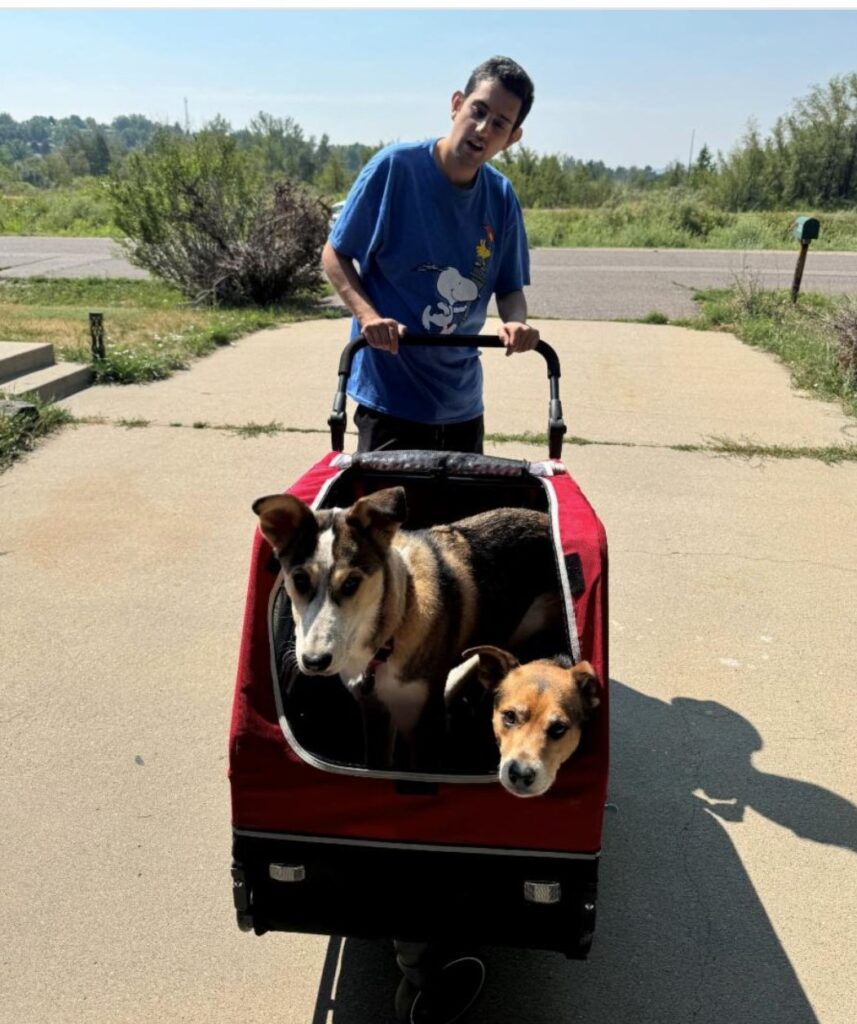
Adam, an active man on the go, is also a loving pet-parent to two pups. His challenge was maintaining his independence via bike while safely transporting his dogs. He applied for funding through the SDI to get a carrier that could be attached to his bike. The result? Continued adventures and responsible pet-parenting!

This is the kind of individualized success your organization, supported by Provider Support Funding, can deliver to the people you serve.

How to Get Endorsement from DDRC

Partnering with DDRC starts with a simple step: filling out the application. Your commitment to excellence is endorsed by taking action. By applying for the Provider Support Funding, you demonstrate your dedication to expanding and innovating IDD services in Jefferson County, aligning your organization with DDRC’s six decades of unwavering commitment to quality, dignity, and choice.

Ready to Apply? Access Your Provider Support Funding Application Now

We encourage all eligible organizations and providers to seize this opportunity to enhance, expand, and innovate your service delivery in Jefferson County. This Provider Support Funding is a direct investment in your dedication and the quality of life for the individuals you serve.

The application is streamlined to respect your time. Don’t let funding gaps limit your impact or stall that crucial new program you know your clients need. Take the first, simple step today and let us partner with you to turn your vision into reality.

Take the first step today.
Click here to fill out the Provider Support Program Application:

Need More Context?

If you would like to compare the Provider Support Program with our other initiatives, you can visit our main page for a full overview of all our Community Funding Programs, including the Unmet Needs Program and the Self-Determination Initiative.

adult woman with IDD taking a cooking class

Finding enriching, practical, and social activities is essential for adults with intellectual and developmental disabilities (IDD). Learning to cook is one of the most rewarding skills, offering independence, confidence, and connection.

Here in Jefferson County, DDRC offers specialized cooking classes for adults with intellectual and developmental disabilities designed to be accessible, fun, and highly practical. These classes help participants master essential life skills while fostering a sense of community and achievement. Whether you are searching for cooking classes for adults with autism or for a wide range of other developmental differences, DDRC is here to support you and your family.

What Do Cooking Classes for Adults with IDD Entail?

Our specialized cooking classes are structured to break down complex culinary tasks into manageable, easy-to-follow steps, ensuring success for every participant. They are a wonderful example of the engaging programs for adults with IDD that we offer. 

  • Customized Curriculum: Lessons are tailored to various skill levels, focusing on simple, nutritious, and delicious recipes (like easy lunches, snacks, or dinners).
  • Safety First: We prioritize kitchen safety, teaching participants how to safely handle utensils, use appliances (like microwaves and stovetops), and prevent cross-contamination.
  • Life Skills Beyond the Stove: The curriculum covers more than just mixing ingredients. Participants learn budgeting, grocery list writing, reading a recipe, and proper storage of leftovers.
  • Sensory and Accessibility Needs: Instructors are trained to address different learning styles and sensory needs, ensuring the environment is comfortable and conducive to learning for adults with autism and other IDD. These classes are often held in our facilities as part of our comprehensive Colorado onsite services.  
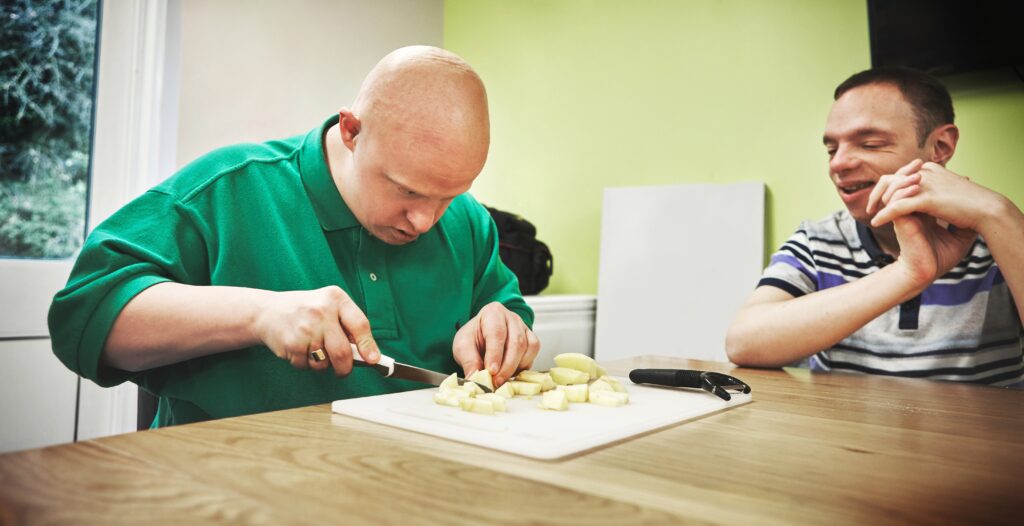
adult man with green shirt cutting vegetables in a cooking class for IDD people

What Makes DDRC’s Classes Different?

DRC’s cooking classes for adults with IDD go far beyond standard instructional settings by prioritizing safety, individualized support, and a positive learning process.

Specialized Staff Training:

Our instructors aren’t just great cooks; they are highly trained in working with diverse intellectual and developmental disabilities. They understand behavior support, communication techniques, and how to adapt tasks for various sensory and motor skill levels.

Focus on Process Over Product:

The goal is to build long-term skills, not just make a perfect dish. We focus on the learning process—safely following multi-step instructions, measuring accurately, and practicing patience—which reinforces foundational skills valuable for all of life’s endeavors.

Accessible and Adaptive Kitchens:

Classes are held in kitchen environments designed for accessibility, ensuring that all participants, regardless of mobility or support needs, can engage fully and comfortably.

Skills Reinforcement at Home:

We maintain open communication with families and caregivers, often sharing recipes and techniques used in class. This allows families to reinforce the new skills in the home setting, turning classroom success into practical, independent living habits.

5 Benefits of Cooking Classes for Adults with Intellectual and Developmental Disabilities

Learning to cook offers profound benefits that extend far beyond the kitchen. These classes are key to promoting holistic development and increasing quality of life.

1. Increased Independence and Self-Reliance

The ability to prepare one’s own meals is a cornerstone of adult independence. By mastering cooking skills, participants rely less on caregivers for basic nutrition. This boost in self-reliance directly supports goals related to independent living for IDD adults.

2. Enhanced Motor Skills and Coordination

Cooking is a practical application of fine and gross motor skills. Tasks like chopping vegetables (safely!), stirring, measuring ingredients, and pouring liquids require and improve hand-eye coordination and muscle control. These repeatable, structured actions help build motor memory.

3. Social Engagement and Community Building

Cooking classes are inherently social. They provide a structured, shared environment where participants interact with peers and instructors. This setting fosters teamwork (e.g., passing ingredients, sharing space), encourages communication, and is a vital component of inclusive recreation and social inclusion. 

4. Practical Math and Reading Skills

Following a recipe is an exercise in practical academics. Participants use math to measure ingredients and manage time (e.g., “bake for 20 minutes”), and they use reading comprehension to follow written steps. These real-world applications make learning math and literacy skills fun and immediately relevant.

5. Confidence Through Achievement

Successfully completing a recipe and sharing a meal—whether it’s a simple sandwich or a homemade dinner—provides a powerful, tangible sense of accomplishment. This feeling of confidence through achievement motivates participants to try new things and take on other responsibilities in their daily lives.

IDD man happy making pizza in cooking class

How Can DDRC Help Adults with IDD and Their Families?

DDRC is committed to supporting adults with IDD in Jefferson County to live meaningful, inclusive lives. Our role goes beyond providing classes; we offer a continuum of support:

  • Personalized Service Plans: We work with families to create individual service and support plans (ISSPs) that integrate practical skill-building activities like cooking into broader independence goals.
  • Skilled and Compassionate Staff: Our instructors and support staff are highly trained in supporting adults with diverse needs, including those seeking specialized cooking classes for adults with autism.
  • Resource Navigation: We help families understand and access state and local funding, resources, and community connections within Jefferson County to ensure their loved ones receive comprehensive care and support.

Get to Cookin’, Everyone!

Mastering kitchen skills is an essential part of a fulfilling, independent life. The cooking classes for adults with intellectual and developmental disabilities offered through DDRC provide a safe, supportive, and fun path toward increased confidence and skill acquisition.

If you or a loved one in Jefferson County is ready to start their culinary journey, DDRC is here to help you take that next rewarding step.

Ready to enroll in an enriching program? Contact DDRC today to learn more about our current class schedules and availability.

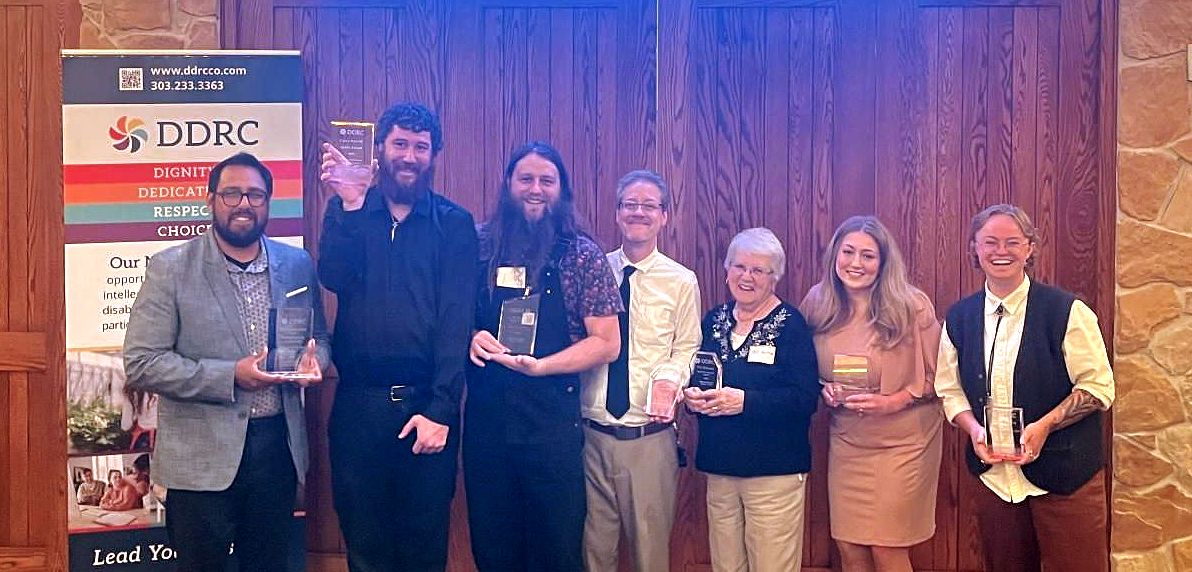
awards ceremony winners DDRC

The DDRC community recently gathered for an unforgettable night of gratitude and inspiration at our Annual Celebration. The evening was dedicated to recognizing the extraordinary individuals and organizations whose dedication, advocacy, and spirit uplift people with intellectual and developmental disabilities (IDD) and strengthen DDRC’s mission every day. It truly showcased why DDRC is a leader in creating opportunities and ensuring that everyone belongs.

The DDRC Annual Celebration Awards kicked off with heartfelt remarks from Susan Hartley, Chair of the DDRC Board of Directors, followed by poignant reflections from Executive Director Rob DeHerrera. The main event was, of course, the presentation of the awards—honoring our 2025 IDD Community Heroes who model compassion and excellence.

What Are Our DDRC Annual Celebration Awards All About?

DDRC’s Annual Celebration Awards are our way of shining a spotlight on the people and partners who go above and beyond to foster inclusion, promote self-determination, and support the well-being of the IDD community in Jefferson, Clear Creek, Gilpin, and Summit counties. These awards acknowledge that the success of our mission relies on a wide network of dedicated advocates, friends, staff, and self-advocates working together. Furthermore, our staff is constantly working to ensure we provide the highest quality autism services in Colorado, a mission supported by every person recognized here.

Read this Month’s Newsletter Here!

Overview of this Year’s IDD Community Heroes & Winners

What does it mean to be an IDD Community Hero? It means showing up for others—whether as a self-advocate, a dedicated partner, an innovative staff member, or a supportive friend.

The Spirit of Teamwork: Honoring Casey Shover  

The Spirit Award honors an individual with a disability who demonstrates perseverance, strives for personal growth and achievement, and actively contributes to their community. This year’s recipient, Casey Shover, embodies these traits and more! Casey is an exceptional Special Olympics athlete. While highly skilled—he can take a basketball the full length of the court—he models true sportsmanship, focusing on teamwork and cheering for his teammates above all else. He also volunteers as a coach and is a dedicated supporter, attending various DDRC functions throughout the year. His positivity, sportsmanship, and desire to make a difference inspire everyone he meets.

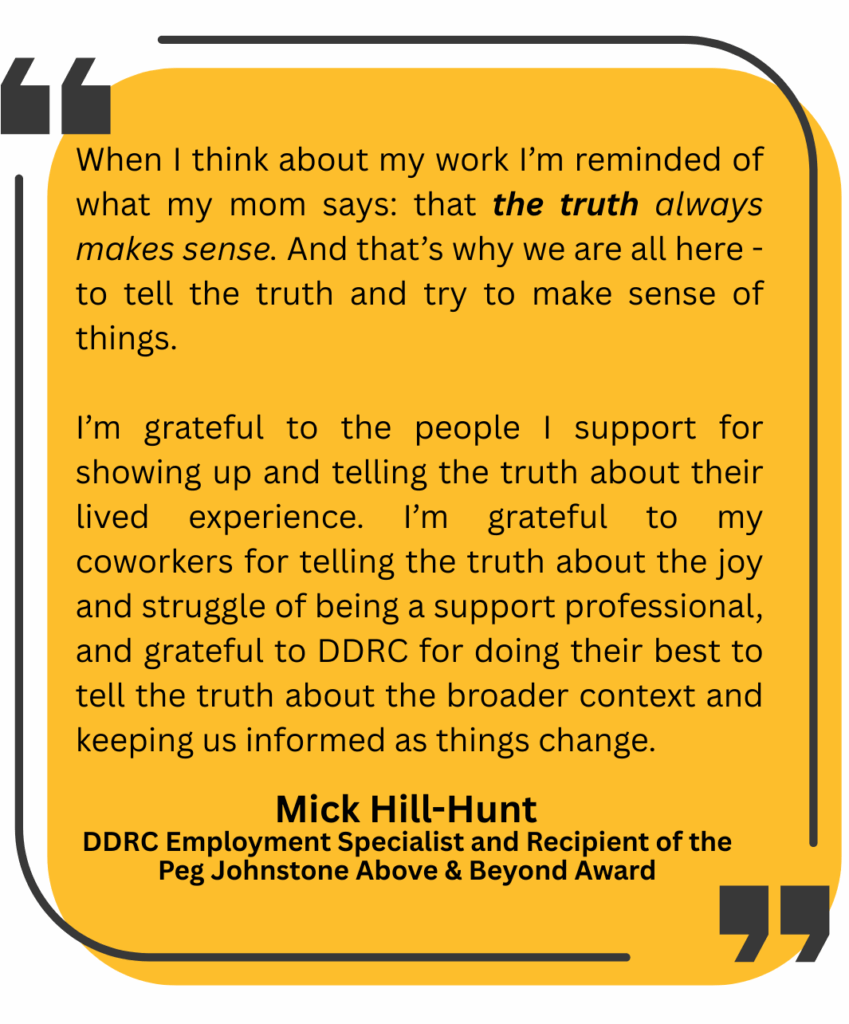
quote from ddrc award winner

Steadfast Support: Credit Union of Denver & Rufino Sanchez  

The Partner of the Year Award recognized the Credit Union of Denver and Rufino Sanchez for their unwavering commitment to DDRC. For the past four years, the Credit Union has been a cornerstone sponsor for major DDRC events, including our annual golf tournament and our 60th-anniversary celebration. Rufino Sanchez is the welcoming, public face of this important partnership. He has personally invited DDRC to host outreach tables in the Credit Union’s lobby and is a tireless champion of our mission at community and Chamber events. His leadership and consistent support embody the true meaning of partnership in community advocacy.

Blending Creativity with Care: Ballmer Peak Distillery 

The Friend Award went to Ballmer Peak Distillery, where owners Austin Adamson and Eric Strom skillfully blend craft with community support. They have become invaluable friends to DDRC, especially for our annual “Spring into Awareness” events celebrating Intellectual and Developmental Disabilities Awareness Month. Ballmer Peak has eagerly provided complimentary tasters, crafted a special “Spring Punch” for the occasion, and donated gift baskets of their wares for our fundraisers. Their quick willingness to get involved and support our awareness campaigns truly embodies the spirit of friendship.

Unwavering Family Voice: Pat Jurann 

Pat Jurann received the Special Recognition Award for her exceptional dedication as a parent and partner in advocacy. Pat is an inspirational figure, whether she is sharing her family’s story at the Legislative BBQ to advocate for policy changes or collaborating with DDRC staff to help her adult children navigate complex workplace challenges. She leads with empathy, balance, and an unwavering belief in self-determination. Pat shows all of us how families and providers can work hand-in-hand to ensure people with IDD achieve meaningful lives.

Setting the Standard: The Peg Johnstone Above and Beyond Staff Winners

The Peg Johnstone Above and Beyond Awards honored three outstanding DDRC staff members who model compassion and excellence at the heart of our operations:

  • Mick Hill-Hunt, Employment Specialist: Recognized for their unwavering advocacy and ethical leadership in employment services.
  • Madison Neal, Direct Support Professional: Honored for her innovation and empathy in designing meaningful opportunities for growth and inclusion.
  • Carlye Jensen, Residential Program Manager: Celebrated for transforming residential care through person-centered practices and creativity. Carlye shared that the award is “a recognition of my passion and a reflection of the people and purpose that inspire it!”

Building Futures: Lee Sylvester and Benefits Planning

The prestigious Charlie Allinson Award celebrated Lee Sylvester, whose leadership built DDRC’s vital benefits planning program from the ground up. This program is essential, as it helps individuals navigate complex government systems so they can achieve fulfilling careers. Recently certified through Cornell University’s Youth Credentialing program, Lee is now actively shaping statewide practices and empowering youth with disabilities to plan for their futures with confidence.

November is a Busy Month: See What Else is Going on at DDRC

As we reflect on these incredible achievements from the DDRC Annual Celebration Awards, we look forward to the opportunities November and December bring for connection, support, and community engagement.

Pizza with a Purpose: Beau Jo’s Benefit on November 13th

Mark your calendars for a delicious night out! Join DDRC at Beau Jo’s Colorado Style Pizza in Arvada on Wednesday, November 13th, from 11:00 a.m. to 9:00 p.m. When you dine in, order takeout, or purchase a gift card, simply tell your server you are there for the DDRC fundraiser. 20% of your total will go directly toward supporting individuals with IDD in our community. It’s an easy and incredibly tasty way to give back!

Double Your Impact: The Mai Family Trust Matching Gift

The spirit of generosity is in the air! Right now, you have the opportunity to double your kindness thanks to the Mai Family Trust. When you give to DDRC between now and December 31st, your gift will be matched dollar-for-dollar, up to $30,000!

Your support fuels vital programs like our Therapeutic Recreation program, which builds friendships, confidence, and unforgettable moments of joy. Inclusive recreation is key to promoting self-worth and independence in the IDD community. We encourage you to give today and help us reach the full match! We are also proud to participate in Colorado Gives Day—you can give early at coloradogives.org/DDRC now through December 9th.

Explore Your Future: Business Exploration Club Kicks Off in 2026

DDRC is excited to announce the return of the Business Exploration Club through our Employment Services, beginning in January 2026. This engaging service, which falls under “group job development,” helps participants explore the world of work through:

  • Informational tours across a variety of industries.
  • Guest speakers sharing career insights.
  • Job readiness workshops focused on resume building and workplace skills.

To sign up or get more information about this incredible opportunity, please email Sean.Webb@ddrcco.com or Mick.Hill-Hunt@ddrcco.com.

Recognizing Our Partners: Case Management Week & Community Connections

In other news, Governor Jared Polis proclaimed October 12–18, 2025, as Case Management Week, recognizing the essential role Case Managers and Early Intervention Service Coordinators play in connecting families with vital resources. DDRC deeply values its collaborative partnership with the Jefferson County Case Management Agency (Jeffco CMA), which provides case management services. We recently participated in the Jeffco CMA’s “Tips and Treats” Children’s Resource Fair to share information on our Pediatric Behavioral Health services and CES Waiver help.

SNAP Benefits Updates

Readers are encouraged to visit their county government websites and county Human Service offices for current information regarding SNAP benefits updates. The recent Federal shutdown has resulted in a hold on SNAP benefit payments, impacting thousands of households. Please consult official county and state resources for the most up-to-date information on eligibility and the impacts of the shutdown on benefits.

Want to Be an IDD Community Hero? Contact Us Today

Each honoree and successful event reminds us that when dedication meets heart, our entire community grows stronger, more inclusive, and full of possibility. The work of DDRC is powered by this shared commitment.

Whether you were inspired by the awards, are looking for job development resources, or simply want to support life-changing programs, there are many ways to get involved.

Would you like to speak with our team about making a donation or accessing services? Contact us today!

adult male with IDD in a wheelchair at a adult program

For over six decades, the Developmental Disabilities Resource Center (DDRC) has stood as a steadfast beacon of hope and support for individuals with intellectual and developmental disabilities (IDD) and their families. Our journey began modestly in 1964, supporting just 60 individuals. Today, we have blossomed into a dynamic nonprofit impacting over 4,700 lives across Jefferson, Clear Creek, Gilpin, and Summit Counties. 

This year, as we participate in Colorado Gives Day, we invite YOU to step into our mission and help us continue to dismantle barriers and build a community where everyone can thrive. We have set an ambitious goal of $80,000, and with your help, we know we can achieve it and secure vital funding for the year ahead.

Donate Today

The Colorado Gives Day Mission: Full Inclusion and Dignity for All 

The mission of DDRC is straightforward yet profound: to create opportunities for people with intellectual and developmental disabilities and their families to participate fully in the community. 

At our core, we envision a world where barriers to personal growth and inclusion are nonexistent, and where quality, dignity, and choice are the foundation of every support we offer. Our unwavering commitment to these values drives every initiative we undertake. We believe every individual deserves the personalized support necessary to lead their best life, fully engaged and embraced by their communities. 

To achieve this, DDRC offers an extensive and comprehensive range of services designed to meet diverse and evolving needs, including: 

  • Day Programs & Recreational Activities: Fostering skills development and community engagement. 
  • Technology Lab: Ensuring access to assistive and adaptive technology. 
  • Behavioral Health Services: Including our new Pediatric Behavioral Health Clinic to expand our capacity to serve the community. 
  • Early Intervention Therapies: Delivering essential therapies to nearly 1,100 children and families each month, setting the stage for brighter futures. 

Why is Colorado Gives Day So Important for Communities like DDRCs? 

As a large, impactful nonprofit organization, DDRC relies on the generosity of the community to sustain and expand the vital supports that empower thousands of Coloradans. Government funding alone cannot cover the costs of the quality, individualized care that defines the DDRC standard. 

Colorado Gives Day is the single most important day of the year for nonprofits like ours for three primary reasons: 

  1. Maximizing Your Impact: It provides a unique opportunity to make your donation go further thanks to a statewide incentive fund. 
  1. Raising Awareness: It shines a spotlight on the critical need for intellectual and developmental disability services across the state. 
  1. Achieving Our Goal: It helps us meet our vital fundraising target of $80,000, securing resources needed for everything from transportation to specialized therapeutic tools. 

Furthermore, please note that generous gifts of $250 or more that are designated specifically to Employment Services qualify for Colorado’s Enterprise Zone Tax Credit, providing you with an additional state tax benefit while supporting crucial job training and placement. 

When is Colorado Gives Day 2025? 

While the official day is typically in early December, the giving period that maximizes your impact is much longer! 

Ways to Celebrate 

Mark your calendars! The Colorado Gives Day giving period runs from November 1 through December 9, 2025. You can schedule your donation or give any time between these dates to support DDRC and help us reach our $80,000 goal. 


From November 1 through December 9, every donation you make will be boosted with a $1M+ Incentive Fund, made possible by Colorado Gives Foundation and FirstBank. Plus, if you set up a new monthly donation, Colorado Gives Foundation will match your first monthly donation up to $100!


You can participate in this major event by: 

  1. Donating: Make a one-time or recurring gift online directly to DDRC. 
  1. Scheduling: Schedule your donation now for the official giving day. 
  1. Spreading the Word: Share this blog post and the link to our Colorado Gives Day page with your network! (The Colorado Gives Day toolkit is a great resource for sharing!) 

Your Support Makes a Profound Difference—Putting Donations to Work 

When you contribute to DDRC, you are not simply donating; you are investing in a future where every individual with IDD has the opportunity for a fulfilling and integrated life. Your donation directly translates into tangible support: 

Donation Amount Impact 
$27,500 Can underwrite one individual’s ability to participate in the Adult Day Services program for an entire year, enabling access to typical community activities like work, recreation, and senior citizen activities. 
$10,000 Can fund two months of crucial Residential Support Services for one individual, fostering a life full of activities, learning, friendships, and meaningful community connections. 
$3,000 Can provide an opportunity for an individual to participate in Therapeutic Recreation and connect to their community. 
$270 Can gift an individual and their family one day of respite care, sustaining the family caregiver’s health and well-being. 

Beyond Cash: Other Ways to Give 

While a donation through Colorado Gives Day is the easiest way to access the Incentive Fund boost, we understand that people want to support our mission in various ways. You can still support DDRC year-round by: 

  • Fundraising: Host a fun run, bake sale, or creative event. 
  • Stock Donations: A smart way to give while benefiting from potential tax advantages. 
  • Legacy and Planned Donations: Make a lasting impact by including DDRC in your estate plans. 
  • Corporate Partnerships: Your business can sponsor an event, offer gift matching, or even hire a program participant to foster an inclusive workplace. 

Every single gesture, from a monthly contribution to donating an old vehicle, strengthens our ability to promote quality, dignity, and choice for the individuals we serve. 

Your Support Makes a Profound Difference 

When you contribute to DDRC, you are not simply donating; you are investing in a future where every individual with IDD has the opportunity for a fulfilling and integrated life. 

Your support directly funds the services that empower individuals to: 

  • Gain independence through Residential Assistance
  • Develop essential skills and lasting friendships in Day Programs
  • Connect with their community through Community Engagement Opportunities
  • Receive early, critical support through Early Intervention for children and their families. 

From our unwavering commitment to fostering quality, dignity, and choice- to the expansion of our new clinical services, every initiative is driven by the desire to see individuals who want IDD services, shine. 

Join us today in this vital mission. Click here to donate to DDRC and schedule your gift during the Colorado Gives Day giving period: https://www.coloradogives.org/organization/DDRC