This month, we’re proud to share stories that reflect the heart of DDRC advocacy, opportunity, and meaningful community connection. In this update, we celebrate Amanda McConnell’s national DSP of the Year honor, recognize Susan Hartley’s powerful HCBS advocacy, highlight career exploration through Employment Services, and share community events, autism acceptance efforts, and outstanding service from our staff. Each story shows how we continue supporting individuals with intellectual and developmental disabilities and their families with compassion, purpose, and inclusion.
In the Community with DDRC: Supporting Individuals and Families Across Colorado
Across every program and partnership, DDRC remains committed to supporting individuals with intellectual and developmental disabilities and the families who care for them. Whether through advocacy, employment opportunities, or community engagement, our work is rooted in creating pathways for independence, inclusion, and connection.
Celebrating Excellence: Amanda McConnell Named DSP of the Year
DDRC is proud to announce that Amanda McConnell, an Employment Specialist on our team, has been named 2026 Colorado Direct Support Professional (DSP) of the Year by ANCOR, the national association representing community-based disability service providers. Amanda is part of ANCOR’s largest-ever class of honorees—57 exceptional DSPs selected from a record 544 nominations nationwide.
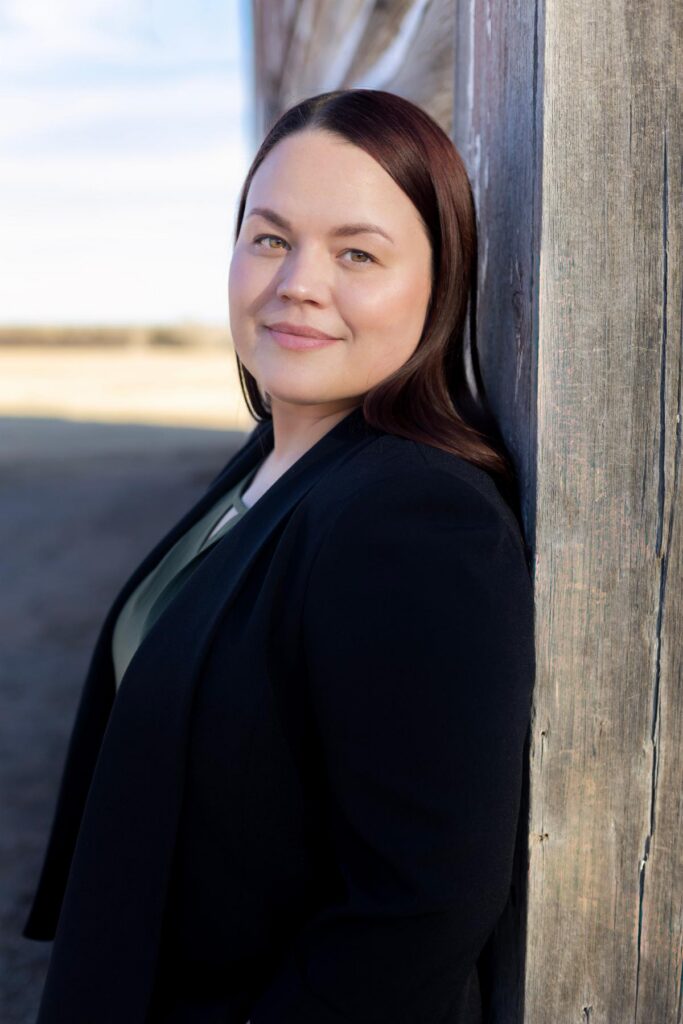
“We’re proud to celebrate Amanda and the impact of her work. Her dedication drives true community inclusion for people with intellectual and developmental disabilities, whom we support, and shows the transformative power of community-based, person-centered services,” said Rob DeHerrera, DDRC Executive Director.
Working closely with the individuals she supports, Amanda helps uncover their interests, build their skills, and explore meaningful, integrated employment opportunities in the community, supporting their independence, purpose, and fulfillment. “Doing this work means being part of someone’s journey, whether it is supporting their goals, helping them build confidence, or celebrating small wins. I’m proud to work in a field where I can make a difference in people’s lives,” Amanda said.
These awards also shine a light on the incredible impact that is made by our direct support workforce.
Chief Executive Officer Barbara Merrill of ANCOR said, “Being recognized with a DSP of the Year Award is a tremendous honor every year, but this year is especially meaningful given the extraordinary pool of nominees.” She added that with ongoing federal and state funding cuts, “direct support professionals need recognition now more than ever.”
DDRC is grateful that ANCOR has recognized Amanda McConnell with this national honor and for spotlighting the essential work DSPs do every day.
Amanda and the other 2026 honorees are featured in ANCOR’s Recognizing Excellence 2026 digital magazine and will be celebrated at an April 23 awards ceremony in Boston. Congratulations Amanda! Event photos will be shared on DDRC’s social media.
Honoring Susan Hartley’s Story on the National Stage & Standing Up for HCBS Funding
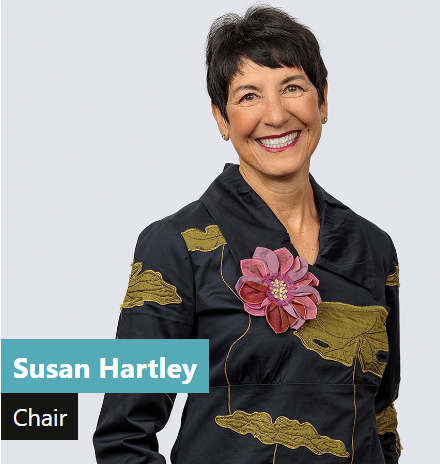
DDRC is honored to celebrate Susan Hartley, our dedicated Board Chair, whose family’s story was recently highlighted in testimony before the U.S. House of Representatives Energy & Commerce Subcommittee on Health. Her experience is a powerful reminder of why Home and Community-Based Services (HCBS) are essential for families across the country, especially at a time when HCBS funding is at risk of federal cutbacks.
As a young single mother, Susan was told her son Cameron should be institutionalized. She refused, navigated years on the HCBS waitlist, and survived with the help of DDRC. When HCBS finally became available, the change was dramatic, allowing her to keep working and focus on Cameron’s well-being rather than constant financial strain. Thanks to HCBS and DDRC, Cameron lived a full and loved life until age 35.
You can watch the testimony here: View the ANCOR testimony.
Finding Her Path: How Curiosity Can Lead to Career Discovery
For many people, work is an important part of life’s journey—and at DDRC, we’re honored to walk alongside individuals as they explore what that journey can look like. Our Employment Services team supports people in discovering meaningful, integrated jobs where they work alongside coworkers without disabilities, including career exploration, job preparation, résumé development, and on-the-job coaching.
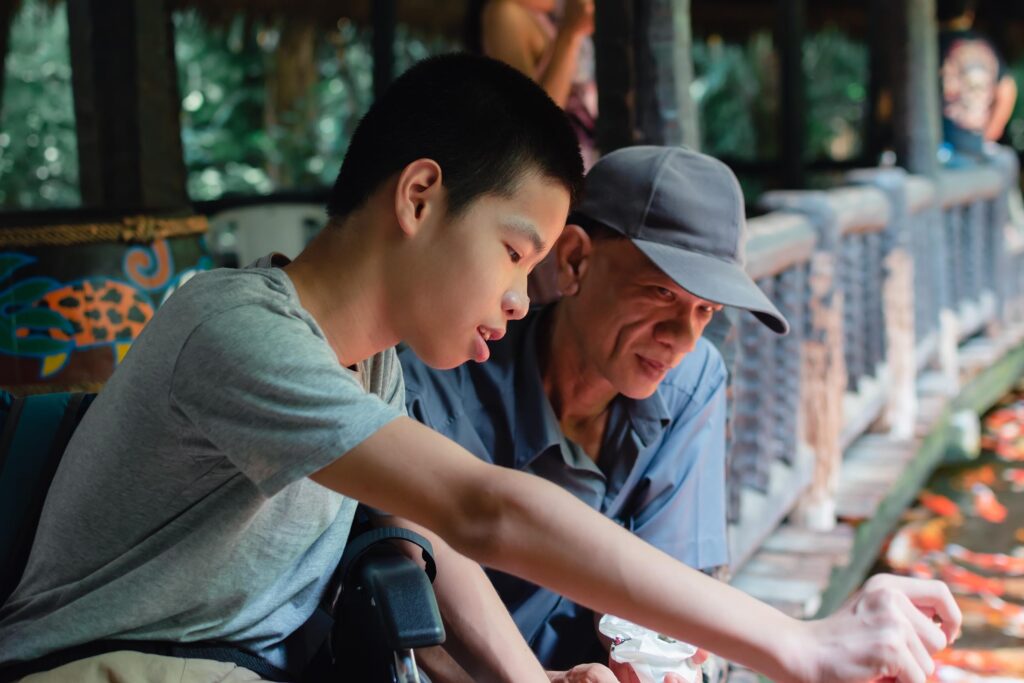
That journey often begins with seeing what’s possible. Recently, Dogtopia Wheat Ridge opened its doors to DDRC participants for a business tour. One participant, Mel, was inspired to try hands-on dog-bathing with support from her DDRC job coach, Sean. That experience sparked a new interest in the pet-care field and may mark a new direction for her.
If you’re exploring your own next step into the world of work, our Employment Services team is here to help you discover what’s possible. And if you’re part of a business willing to open your doors to individuals with intellectual and developmental disabilities as they learn about different careers, we’d love to connect.
Tee It Up! Save Aug. 10 for DDRC’s Annual Golf Event

This year’s DDRC Golf Tournament is heading to Hiwan Golf Club for a day of classic fun, big swings, and meaningful impact, where every drive down the fairway supports DDRC’s programs.
Golfers will enjoy:
- 18 holes + cart
- Complimentary breakfast
- Golfer gift
- On-the-green games
- Post-tournament meal
- Support DDRC programs
Watch for player and sponsor details coming soon to DDRC’s website. In the meantime, save August 10 to join us for a drive worth taking.
Let’s Connect at Jeffco Schools’ Parents Encouraging Parents Event, April 24
DDRC is excited to participate in Jeffco Schools’ Parents Encouraging Parents (JPEP) Resource Fair and Conference on Friday, April 24, 2026, at Bear Creek High School. This event is designed for families and educators connected to Special Education, 504 Plans, Gifted & Talented, or Twice-Exceptional services. Our team will be on-site to share information, answer questions, and provide helpful takeaways about DDRC services.
Event Details
Date: Friday, April 24, 2026
Location: Bear Creek High School, 9800 W Dartmouth Pl, Lakewood, CO 80227
Resource Fair: 8:00 AM – 1:25 PM
DDRC Recognizes Autism Acceptance & Awareness Month This April
April marks Autism Acceptance & Awareness Month, a time dedicated to deepening understanding, promoting inclusion, and celebrating the strengths of people on the autism spectrum. DDRC supports individuals with intellectual and developmental disabilities, including those with autism, in ways that reflect our commitment to acceptance and inclusion.
Autism is often described as being “on the spectrum” because it encompasses a wide range of characteristics, abilities, and support needs. Autism Spectrum Disorder (ASD) can affect communication, social interaction, sensory processing, and daily routines in unique ways. Some individuals may experience challenges such as difficulty with transitions, limited communication, social awkwardness, or sensory overload, while others may demonstrate exceptional focus, creativity, or problem-solving skills. As Temple Grandin said, “I am different, not less.”
Creating sensory-friendly environments, such as limiting loud noise or offering quiet spaces, helps ensure individuals can participate comfortably. Messaging that promotes kindness and anti-bullying reinforces the importance of acceptance and respect for all.
This year’s national theme, “Celebrate Differences,” led by the Autism Society of America, encourages communities to move beyond awareness toward genuine acceptance, recognizing that neurodiversity enriches our world. Blue is the designated color for Autism Awareness and Acceptance Month, and symbols of support include the infinity symbol, representing the spectrum’s infinite diversity. While the traditional puzzle piece remains widely recognized, many self-advocates prefer the infinity symbol as a more inclusive representation.
Autism Acceptance & Awareness Month reminds us that inclusion is not a one-month initiative; it is an ongoing commitment. DDRC encourages everyone to embrace neurodiversity, uplift autistic voices, and “see the able, not the label.”
Family Caregiver Gives Kudos for Exceptional Kindness and Caring Service
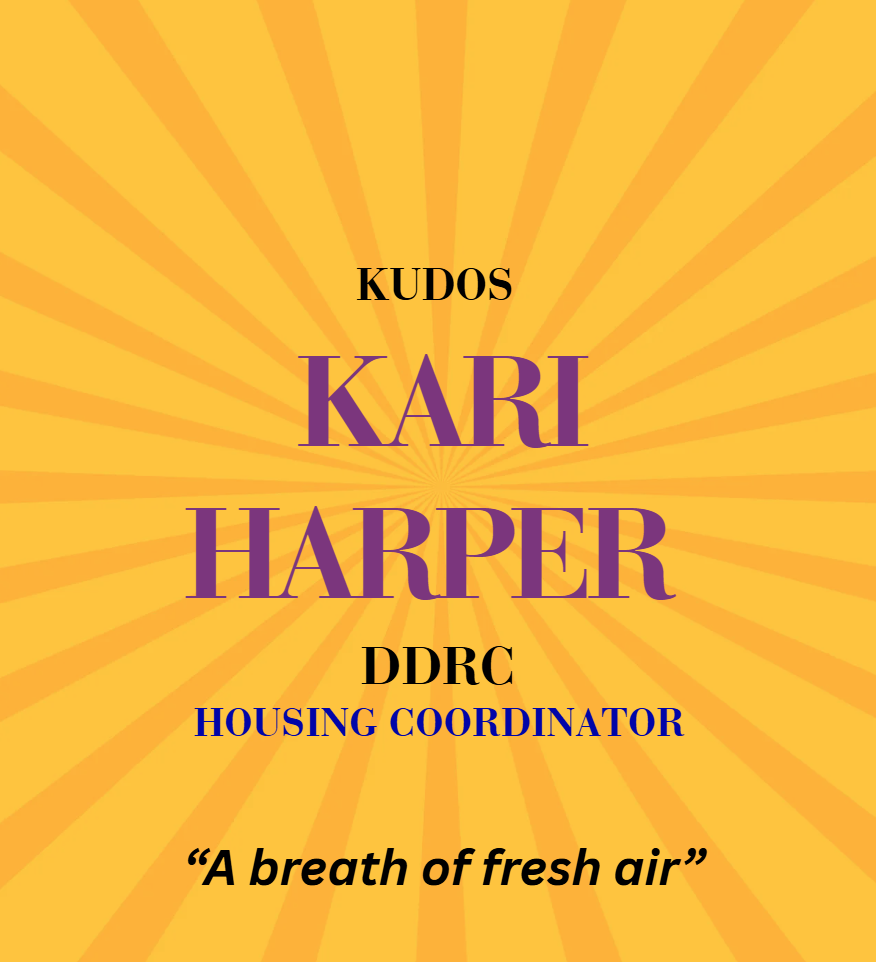
In a fast-moving world where kindness often goes unspoken, one local caregiver took the uncommon step of writing to DDRC leadership to recognize the exceptional support she received from Kari Harper, DDRC Housing Coordinator.
The caregiver, Clarissa, who supports her adult brother, shared that every interaction with Kari has been marked by patience, warmth, and genuine care. “Each time I’ve spoken with her, she has been so helpful, kind, and considerate,” she wrote. Even when thanked, Kari simply replies, “It’s my job.”
But as Clarissa explained that level of compassion is far from ordinary. Navigating services for her brother means speaking with many professionals, and too often those conversations feel rushed or dismissive. Kari’s approach, she said, is “a breath of fresh air.”
Clarissa’s message is a powerful reminder that taking a moment to acknowledge caring service is rare and deeply meaningful. It also reflects the heart of DDRC’s mission: staff who show up with empathy, listen fully, and make people feel supported.
Kari’s commitment embodies the compassion and professionalism that DDRC strives for every day. To recognize her quiet excellence and the difference she makes, DDRC is proud to present her with a Customer Service Award.
In the Community with DDRC
March was a meaningful month as we celebrated IDD Awareness Month and connected with our community through events and resource fairs. We joined activities at the state capitol and the IDD Awareness Day luncheon hosted by Alliance Colorado, The Arc of Colorado, and JFK Partners, where two of our Direct Support Professionals were honored as nominees for DSP of the Year.
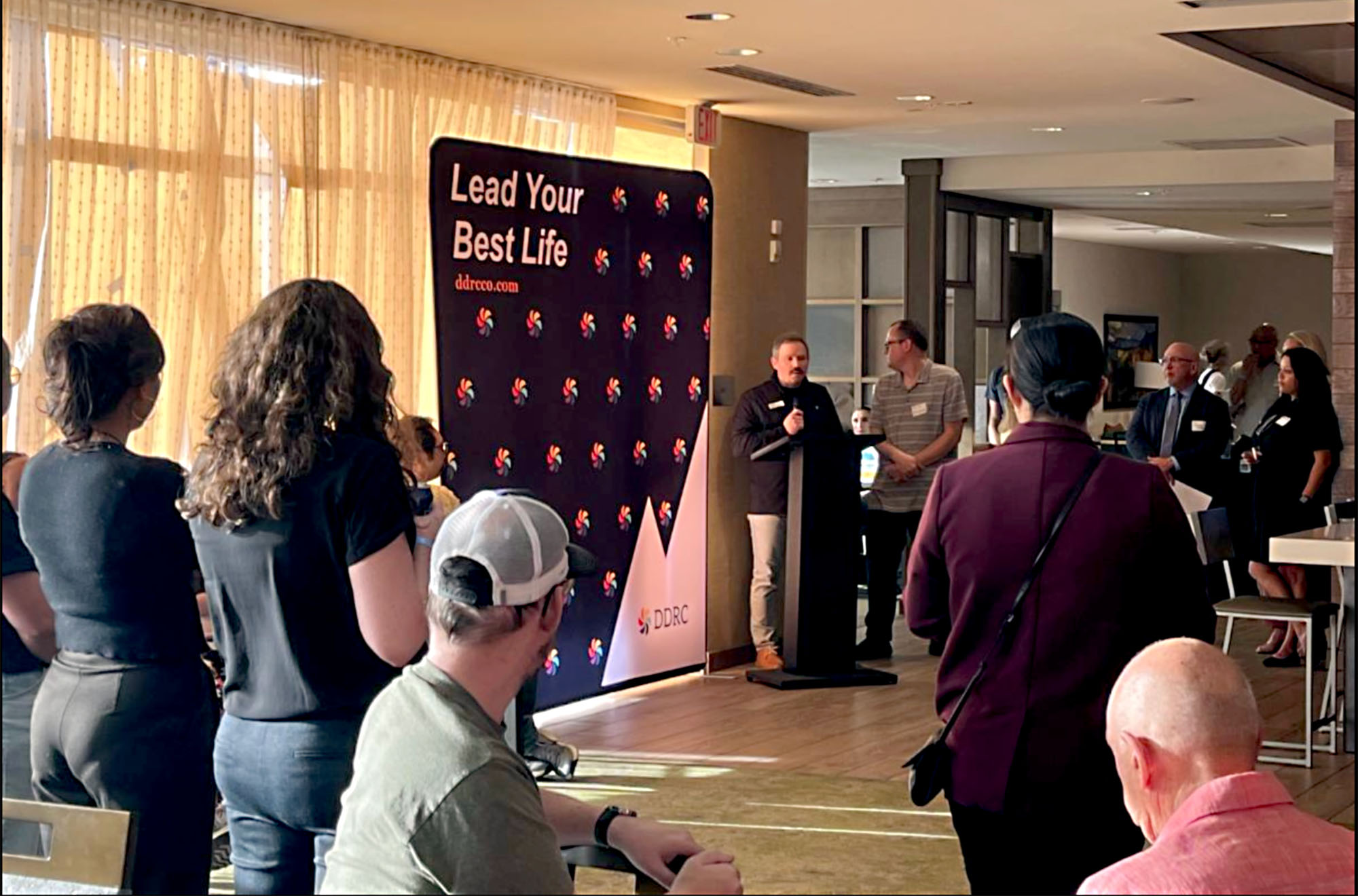
DDRC also organized and cohosted Spring into Awareness, bringing together businesses, nonprofits, individuals, and staff to celebrate inclusion, opportunity, and community building. We also hosted the Jeffco Schools Sequencing of Services Committee, connected with families and students from Denver’s North High School transition program, and participated in the Arc of Adams County’s Disability Resource Fair on April 2.
We value every opportunity to engage with our community and highlight how DDRC supports people with intellectual and developmental disabilities. If your organization is hosting a community event or resource fair, we’d love to participate. Please reach out here.
Want to Stay Connected with DDRC? Contact Us Today
Being in the community with DDRC means staying connected, supporting one another, and continuing to build a more inclusive future. From services and employment opportunities to community events and advocacy, we’re proud to walk alongside individuals and families every step of the way. If you’d like to stay up to date on DDRC news, programs, and upcoming events, sign up for our newsletter and stay connected with our community.