
man with autism being hugged by supportive woman

The Importance of Autism Services in Colorado

Autism Spectrum Disorder (ASD) is a complex neurodevelopmental condition that affects individuals differently, impacting communication, social interaction, and behavior. As the understanding and diagnosis of autism continue to evolve, so does the critical need for comprehensive and accessible support systems. In Colorado, the availability and quality of autism services in Colorado are paramount, not just for individuals on the spectrum, but for their families and the broader community.

At DDRC (Developmental Disabilities Resource Center), we see firsthand every day the profound impact that tailored, person-centered Colorado autism, and other intellectual and developmental disabilities (IDD), services can have. From early intervention in childhood to support for independent living in adulthood, these services are not merely beneficial—they are essential for fostering independence, promoting inclusion, and enhancing the overall quality of life for Coloradans with autism.

What are Autism Services in Colorado?

Autism services in Colorado encompass a wide range of therapeutic, educational, and supportive interventions designed to meet the diverse needs of individuals across the lifespan. These services are often multidisciplinary, involving a team of professionals working together to create individualized plans.

Common services in Colorado that support individuals with IDD, to include autism, are:

  • Early Intervention Programs (EI Colorado): For children from birth through age two, these services focus on addressing developmental delays and are often provided in natural environments (like the home) to support a child’s early development in communication, social-emotional skills, adaptive behavior, and more. DDRC’s early intervention service coordinators play a crucial role in guiding families through this vital stage.
  • Applied Behavior Analysis (ABA) Therapy: A widely recognized, evidence-based therapy that focuses on understanding and improving behaviors, social skills, and communication. ABA programs are highly individualized and typically involve one-on-one sessions.
  • Speech and Language Therapy: Essential for individuals with autism to develop verbal and non-verbal communication skills, improve articulation, and enhance social communication.
  • Occupational Therapy (OT): Helps individuals develop skills for daily living activities (e.g., dressing, feeding, fine motor skills) and sensory integration, aiding those who struggle with processing sensory information.
  • Social Skills Groups: Provide structured environments for individuals with autism to learn and practice social interactions, understanding social cues, and building relationships.
  • School-Based Support: Public schools in Colorado are mandated to provide special education services under the Individuals with Disabilities Education Act (IDEA), often including individualized education programs (IEPs) that address the unique needs of students with ASD.
  • Family Support Services: Programs like the Family Support Services Program (FSSP) provide financial assistance and resources to families navigating the challenges of raising a child with developmental disabilities, including autism.
  • Adult Services: As individuals with autism transition into adulthood, services shift to support independent living, employment, community integration, life skills training, and vocational support through programs like Colorado community-based services.
  • Diagnostic and Evaluation Services: Comprehensive assessments by multidisciplinary teams are crucial for accurate diagnosis and to inform the development of effective intervention plans.

These services are delivered through various channels, including Community Centered Boards and Program Approved Service Agencies (like DDRC), private therapy centers, hospitals (such as Children’s Hospital Colorado), schools, and non-profit organizations dedicated to autism advocacy and support.

young woman with autism doing activities

The 7 Profound Benefits of Autism Services in Colorado

The impact of high-quality autism services in Colorado extends far beyond the individual, creating ripple effects that benefit families and society as a whole. Here are some of the profound benefits:

1. Enhanced Communication Skills:

Many individuals with autism face challenges with communication. Therapies like speech therapy and ABA can significantly improve both verbal and non-verbal communication, allowing individuals to express their needs, thoughts, and feelings more effectively. This reduces frustration and fosters stronger connections.

2. Improved Social Interaction:

Autism services in Colorado provide structured opportunities to develop crucial social skills, from understanding body language and facial expressions to initiating and maintaining conversations. This helps individuals navigate social situations more successfully, build friendships, and participate more fully in their communities.

3. Increased Independence and Daily Living Skills:

Occupational therapy and life skills training empower individuals with autism to gain greater independence in daily routines, self-care, and household tasks. This reduces reliance on caregivers while also boosting self-confidence.

4. Reduced Challenging Behaviors:

Evidence-based therapies, particularly ABA, are highly effective in addressing challenging behaviors often associated with autism. By understanding the function of these behaviors and teaching alternative, more appropriate responses, individuals can lead safer and more integrated lives. DDRC offers comprehensive behavioral health services to support this.

5. Academic and Vocational Success:

Early and consistent intervention lays a strong foundation for learning. Improved communication, focus, and social skills can lead to better academic outcomes. For adults, vocational training and supported employment services help individuals find meaningful work and contribute to the workforce.

6. Greater Family Well-Being:

Autism services in Colorado not only support the individual but also provide vital resources, training, and respite for families. Understanding their child’s needs, learning effective strategies, and connecting with support networks can significantly reduce family stress and improve overall family dynamics.

7. Fostering Community Inclusion:

By developing essential life skills and reducing barriers, autism services enable individuals with ASD to participate more fully in their schools, workplaces, and local communities, enriching the diversity and vibrancy of Colorado.

8. Long-Term Positive Outcomes:

Research consistently shows that early intervention in autism leads to significantly better long-term outcomes, including improved cognitive abilities, greater independence, and a higher quality of life in adulthood. Investing in services early can reduce the need for more intensive and costly supports later on.

More Things to Know About Colorado Autism Services

Colorado is continuously working to improve and expand its autism services in Colorado, though challenges always exist in ensuring equitable access and sufficient funding. Here are some additional points:

  • Community Centered Boards (CCBs): Organizations like DDRC play a pivotal role in accessing community-funded services for individuals with intellectual and developmental disabilities (IDD), including autism. For more information, visit DDRC Community Funded Programs.
  • Insurance Coverage: Colorado has specific laws mandating insurance coverage for autism-related treatments, including Applied Behavior Analysis (ABA) therapy. While there have been changes over the years (e.g., removal of age and dollar caps on certain services for state-regulated plans), families should always verify their specific policy details and work with providers regarding prior authorizations.
  • Advocacy and Awareness: Numerous advocacy groups and non-profits in Colorado work tirelessly to raise awareness, educate the public, and lobby for policies that improve the lives of individuals with autism and their families. Their efforts are crucial in ensuring services remain a priority.
  • Lifespan Support: It’s important to remember that autism is a lifelong condition, and services are needed not just in childhood but through adolescence and adulthood. Colorado autism services aim to provide a continuum of care that addresses evolving needs, from educational transitions to supported living and employment.
  • Current Challenges: While significant progress has been made, challenges such as waitlists for certain services, workforce shortages in therapy fields, and ensuring adequate reimbursement rates for providers remain ongoing areas of focus for the state and service agencies. These challenges underscore the continued importance of advocacy and strong support systems.

What Makes DDRC Your Partner in Autism Support in Colorado

At DDRC, we are deeply committed to empowering individuals with intellectual and developmental disabilities (including autism) and their families throughout Colorado. DDRC is at the forefront of connecting Coloradans to the vital autism services in Colorado they need, to include support for individuals with autism. Our approach is person-centered, ensuring that every individual’s unique strengths, challenges, and goals are recognized and supported.

Our comprehensive services, from early intervention to behavioral health services for kids and our other community-based activities for adults, reflect our dedication to a holistic approach. We believe that with the right services and support, individuals with autism can thrive, achieve their fullest potential, and live rich, meaningful lives within their communities. Our team of dedicated professionals works collaboratively with families, providers, and community partners to navigate the complex landscape of autism support in Colorado.

A Brighter Future Through Dedicated Services

The importance of comprehensive autism services in Colorado cannot be overstated. They are the cornerstone of a society that values inclusivity, diversity, and the full potential of every individual. By investing in these services, we empower Coloradans with autism to communicate, connect, learn, and contribute, building a stronger, more compassionate state for all.

If you or a loved one is seeking services in Colorado to support individuals with autism, we encourage you to contact DDRC today. We are here to guide you through the process and connect you with the resources that can make a profound difference.


The early years of a child’s life are full of growth, change, and discovery. During this critical window—birth to age three—the brain is developing faster than at any other time. For children who may be experiencing developmental delays or who have disabilities, early support can make all the difference. That’s why Early Intervention services and support are so essential. At DDRC, we believe in the power of starting early to unlock every child’s unique potential and lay the groundwork for lifelong learning and success. 

This article explores what Early Intervention services are, who can benefit, and how they support development during a child’s formative years. If you’re a parent, caregiver, or early childhood professional in Jefferson County or surrounding areas, we’re here to help you understand your options and connect with the support your child deserves. 

What are Early Intervention Services and Support? 

Early Intervention services and support are specialized programs designed to assist infants and toddlers (birth through age three) who are experiencing developmental delays or have been diagnosed with a disability. These services are aimed at enhancing a child’s physical, cognitive, communication, social-emotional, and adaptive development. 

At their core, Early Intervention services are centered around empowering families and supporting the natural learning that happens in everyday routines. 

Services can include: 

  • Developmental evaluations 
  • Speech and language therapy 
  • Occupational therapy 
  • Physical therapy 
  • Behavioral support 
  • Vision or hearing services 
  • Family education and coaching 

These services are typically provided in the home or community settings where children feel most comfortable. At DDRC, we prioritize family-centered care, so our team works in close collaboration with parents, guardians, and other caregivers to help integrate strategies into daily life. 

special needs child with parent getting early intervention support

Who Can Benefit from Early Intervention Services and Support? 

Parents are often the first to notice when something seems different. Maybe your child isn’t babbling or crawling like their peers, or they seem uninterested in engaging with others. Trusting your instincts and seeking an evaluation early can lead to better outcomes. In Colorado, families can access these evaluations by contacting their local Early Intervention provider like DDRC. 

Early Intervention services and support are designed for children under the age of three who are showing signs of developmental delay or have a diagnosed condition that puts them at risk for delays. 

 This includes, but is not limited to: 

  • Speech or language delays 
  • Motor skill difficulties 
  • Social or emotional challenges 
  • Cognitive or learning delays 
  • Diagnosed conditions such as Down syndrome, cerebral palsy, autism spectrum disorder, or hearing/vision loss 
  • Premature birth or low birth weight 
  • Complications during birth 

According to the Cleveland Clinic, “Your child will qualify for Early Intervention if experts determine they have a developmental delay or disability. Some children automatically qualify if they’ve been diagnosed with a condition that’s likely to result in developmental delay. If your child doesn’t have such a diagnosis, they’ll go through an evaluation process.” 

Here Are the Benefits of Early Intervention Services and Support in the Early Years 

Understanding the benefits of Early Intervention support services can go a long way in interpreting your child’s needs. Here are 5 benefits:  

1. Boosts Development During Critical Brain Growth 

The brain is most adaptable and responsive to change in the first three years of life. In fact, research shows that 80% of a child’s brain is developed by the time they’re 3 years old. By addressing developmental concerns early, children can build strong neural connections that set the stage for future learning. This is especially impactful for skills related to communication, motor abilities, and problem-solving. The earlier support begins, the better the chances of mitigating delays or preventing them from becoming more significant. 

2. Improves Communication and Social Skills 

Early Intervention can make a profound difference in how children learn to express themselves and interact with others. For a child with delayed speech or language, working with a therapist early on can open the door to clearer communication, reduced frustration, and stronger relationships with caregivers and peers. 

3. Supports Family Confidence and Connection 

Parents and caregivers are a child’s first and most important teachers. Early Intervention services are designed to work in partnership with families, helping them learn how to support their child’s development during everyday routines—like mealtimes, bath time, or play. This not only strengthens the parent-child bond but also increases families’ confidence and understanding of their child’s needs. 

4. Promotes School Readiness and Long-Term Success 

Children who receive Early Intervention often enter preschool and kindergarten better prepared to participate, engage, and succeed. They’re more likely to require fewer special education supports later on and are better equipped to thrive in inclusive settings. Research shows that high-quality Early Intervention leads to improved academic performance, better employment outcomes in adulthood, and increased independence. 

5. Reduces Future Costs of Care and Services 

According to the Centers for Disease Control and Prevention (CDC), Early Intervention can significantly reduce the need for more intensive—and often more costly—services later in life. Investing in a child’s development during the early years saves money in health care, education, and social services while improving quality of life. 

The Early Intervention Process 

In Colorado, the Early Intervention process follows a coordinated approach to ensure families get timely and appropriate services. Here’s what it typically looks like: 

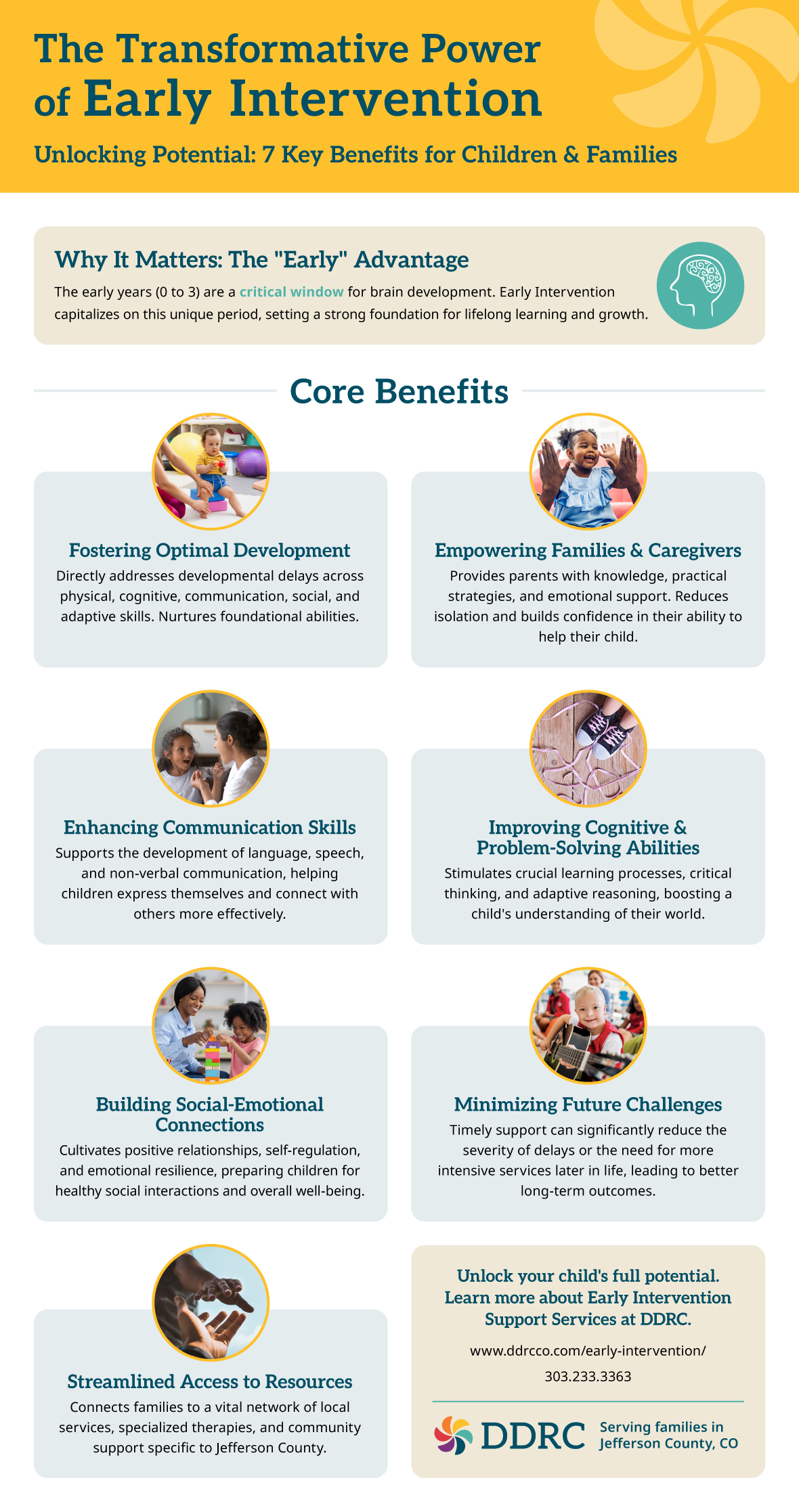
infographic on the power of early intervention

Step One: Referral 

Parents, pediatricians, childcare providers, or other professionals can refer a child for an evaluation. Families can also refer their own child by contacting their local Early Intervention program. 

Step Two: Evaluation

A multidisciplinary team conducts a developmental evaluation to determine whether a child is eligible for services. This may involve observing your child, asking questions, and using screening tools to assess areas like speech, motor skills, and social behavior. 

child hitting high fives

DDRC conducts 80-100 Early Intervention evaluations each month, with close to 90% of children qualifying for ongoing Early Intervention services.

Step Three: Individualized Family Service Plan (IFSP)

If eligible, the team works with the family to develop an IFSP. This document outlines the child’s goals, the services they’ll receive, and how progress will be measured. Families are integral partners in this process. 

Step Four: Service Delivery 

Services are provided in natural environments, such as the home or a childcare center, and are designed to fit into your family’s routines. Providers work closely with caregivers to ensure strategies are realistic, sustainable, and effective. 

Step Five: Ongoing Review and Transition Planning 

Progress is reviewed regularly, and adjustments are made as needed. As a child approaches their third birthday, the team helps plan the transition into preschool services or other appropriate supports. 

Why Choose DDRC for Early Intervention Support Services in Jefferson County? 

As the designated Early Intervention provider for Jefferson, Clear Creek, Gilpin, and Summit counties, DDRC has been a trusted partner for families across Colorado for decades. Our team includes speech-language pathologists, occupational therapists, physical therapists, developmental specialists, and service coordinators who are deeply committed to helping every child succeed. 

What sets DDRC apart is our holistic, family-centered approach. That means we listen, we collaborate, and we tailor services to your unique situation and goals. Here are a few aspects of our Early Intervention services and support that stand out: 

  • Free Early Intervention service evaluations for children under age 3 
  • Highly skilled, compassionate professionals 
  • Services delivered in your home or community 
  • Bilingual support available 
  • Guidance through every step of the process 
  • Individualized plans that respect your values and routines 

We’re here to make this process feel supportive, not overwhelming. More than that, we’re here to celebrate every success with you along the way. 

Your Child’s Potential, Our Unwavering Support 

Every child deserves the chance to thrive. With Early Intervention services and support, families can take proactive steps to nurture their child’s development, boost confidence, and lay the foundation for a bright future. At DDRC, we’ve seen how small, early steps lead to big, lifelong victories. 

If you have questions or think your child may benefit from an evaluation, don’t wait. Contact DDRC today to learn more about how our Early Intervention services can support your family in Jefferson County and beyond. We’re here for you—and we believe in what’s possible. 

inclusive education young down syndrome child happy at school

Welcome to our August newsletter recap! We’re celebrating a story of a dream fulfilled, offering critical information for families, and getting ready for a series of community events that you won’t want to miss.

Our August Newsletter Recap:

How Inclusive Higher Education Changed Ella’s Life!

“I’ve dreamed of going to college like my older sister since high school,” Ella shared. “I didn’t think I could because of my learning challenges.” But inclusive higher education changed that.

At DDRC, we believe everyone deserves the opportunity to achieve their dreams. This month, we shared the inspiring story of Ella, a young woman thriving in an inclusive higher education program at Metropolitan State University of Denver. Thanks to assistance through DDRC’s Self Determination Initiative (SDI), Ella is now a proud Metro Roadrunner, commuting independently, making friends, and gaining confidence. Her story is a powerful reminder of the impact that targeted assistance and DDRC funding can have on opening doors for students with intellectual and developmental disabilities.

Planning for the Future: Succession Planning for Caregivers

If you provide care for a loved one with a disability, you’ve likely thought about their future. This month, we highlighted the critical importance of succession planning for caregivers. DDRC supports programs like the free Foundational Succession Planning sessions from the Colorado Office of Employment First (COEF) and the Colorado Developmental Disabilities Council (CDDC). These resources help families plan for a loved one’s future, ensuring they are cared for even when you’re no longer there. To learn more about our other support options, visit our page on residential services for adults with disabilities and the family caregiver program in Colorado.

Provider Support Funding for Jefferson County

We’re proud to support the organizations that serve our community. Our community funding program, the Provider Support Funding (PSF) Program, is designed to help providers address unmet needs and innovate their services for individuals with IDD or developmental delays.

Behavioral Health Community Conversations

The Colorado Behavioral Health Administration (BHA) is touring the state to gather input on improving the behavioral health system. We highlighted the next Denver-Metro event on Wednesday, September 10, 2025. You can find more information about this and our other Community Services for People with Disabilities on our website.

Upcoming Events: Don’t Miss Our Auctions, Bash, and BBQ

This August and September are packed with events for the whole community!

Vacation, Staycation & Experiences Auction

Our annual online auction is running from August 1-11, with all proceeds going to support DDRC! Bid on amazing getaways, local escapes, and experiences to support a great cause.

Back to School, Big on Fun: Join the Bash

Join DDRC at the free Jefferson County Schools Back to School Bash on Saturday, August 9th, from 9 AM to 2 PM at Jeffco Stadium. Stop by our booth for games, giveaways, and to learn about our latest programs.

Fresh Off the Grill! Legislative BBQ

Mark your calendars for September 4th, 2025! The Legislative BBQ is a chance to connect with elected officials and community members over good food.

DDRC Will Always Be Here For You

From celebrating milestones like Ella’s college journey to providing essential resources and hosting community-building events, DDRC is committed to serving the needs of individuals and families in Jefferson County. We are grateful for your continued support and look forward to connecting with you. To stay up to date, be sure to join our newsletter!

child with developmental disabilities with loving dad who seeked out early intervention service coordinator

Navigating the journey of early childhood development can be both joyful and, at times, overwhelming, especially when concerns about a child’s progress arise. For families facing developmental delays or disabilities in their infants and toddlers, finding the right support is paramount. This is precisely where an Early Intervention Service Coordinator steps in, becoming an invaluable guide and advocate. At DDRC, in Jefferson, Clear Creek, Gilpin, and Summit Counties, we understand that finding comprehensive support can feel complex, and our Service Coordinators are here to simplify that path, ensuring your child receives the essential early intervention services they need to thrive.

early intervention service coordinator working with a small disabled child on a purple ball

Who is an Early Intervention Service Coordinator?

An Early Intervention Service Coordinator is a dedicated professional who serves as the primary point of contact and guide for families within the early intervention system. Often coming from backgrounds in education, social work, or child development, they have the expertise and compassion needed to support families through every stage of their journey. Their role is to ensure that children from birth to three years old with developmental delays or disabilities, and their families, receive timely, coordinated, and effective early intervention services. These professionals are a key part of delivering a family-centered approach to early intervention services because they are specifically trained to empower parents to make the most informed decisions for their child’s care.

Key Responsibilities of Your Early Intervention Service Coordinator

The role of a service coordinator is multifaceted and critical to the success of early intervention services. Here are 5 of their primary responsibilities:

1. Navigating the Early Intervention Process

From the initial referral to understanding eligibility, your Early Intervention Service Coordinator simplifies what can seem like a daunting process. They help families understand their rights, answer questions about evaluations, and clarify the steps involved in accessing essential services. This includes guiding families through initial paperwork and ensuring all necessary assessments are completed.

2. Developing the Individualized Family Service Plan (IFSP)

Early Intervention Service Coordinators are especially important since they spearhead the development of each Individualized Family Service Plan (IFSP). This personalized document outlines a child’s current development, family priorities, child outcomes, and the specific early intervention services designed to meet their needs and goals. They facilitate meetings, ensure family input is central, and help coordinate the various professionals involved.

3. Connecting to Therapies and Services

Once the IFSP is in place, your service coordinator ensures that your child receives the identified therapies and services. This involves linking families with appropriate therapists, special educators, and other specialists, based on the child’s individual needs.

4. Advocating for Your Child’s Needs

Throughout the entire process, your service coordinator acts as a steadfast advocate for your child. They ensure that services are delivered as outlined in the IFSP, address any concerns that may arise, and empower parents to voice their preferences and participate fully in all decisions regarding their child’s care.

5. Providing Ongoing Support and Resources

Early Intervention Service Coordinators offer consistent support and are a reliable point of contact for families, helping them navigate challenges, celebrate successes, and connect with broader resources and community services for People with Disabilities in Jefferson County. This includes guiding families toward options like respite care for children, youth ABA therapy, or understanding other services that are available, such as special education resources at the school district, explaining services for their child after they exit early intervention, or connecting them to the Case Management Agency (CMA) for Family Support. This ongoing relationship builds trust and provides a continuous lifeline for families.

disabled child with mom booping noses

Why Having an Early Intervention Service Coordinator Makes a Difference for Families

The presence of a dedicated professional in this role can profoundly impact a family’s journey, transforming a potentially fragmented experience into a cohesive and supportive one.

Reducing Family Stress

The early intervention system can be complex, with numerous services and professionals involved. Early Intervention Service Coordinators act as a central hub during the entire process, simplifying communication and reducing the emotional burden on families who are already coping with the demands of caring for a child with special needs.

Ensuring Coordinated Care

Without Early Intervention Service Coordinators, families might find themselves navigating multiple therapists independently. These professionals help make sure that all early intervention services are integrated and aligned, fostering a truly holistic and coordinated approach to the child’s development.

Empowering Parents as Advocates

A dedicated Early Intervention Service Coordinator also empowers parents by providing them with information, resources, and confidence. They help parents understand their child’s unique developmental profile, learn effective strategies to support their child at home, and feel equipped to advocate for their child’s needs within the educational and healthcare systems.

Fostering Better Developmental Outcomes

With streamlined access to appropriate therapies, a dedicated team, consistent support, and a well-coordinated plan, children are more likely to make significant developmental strides. The comprehensive and timely support orchestrated by an Early Intervention Service Coordinator can lead to improved long-term outcomes, setting a strong foundation for future learning and growth.

The Early Intervention Service Coordinators at DDRC: Your Local Guide in Jefferson County and Surrounding Areas

At DDRC, we take immense pride in our team of compassionate and highly skilled Early Intervention Service Coordinators. With deep roots in the Jefferson County community, our service coordinators possess an unparalleled understanding of local resources, support networks, and school systems, including a wide array of IDD services in Colorado. We are committed to a truly family-centered approach, working collaboratively with you every step of the way. Our goal is not just to provide services, but to build a supportive partnership that empowers your family and celebrates every milestone in your child’s journey.

Finding Your Path

The early years are foundational, and every child deserves the opportunity to reach their full potential. If you have concerns about your child’s development, remember that you are not alone, and help is within reach. A dedicated professional can illuminate the path forward, providing the guidance, resources, and support your family needs.

If you’re a family in Jefferson County or the surrounding area and have questions about your child’s development or the Early Intervention process, don’t hesitate to reach out to DDRC today. Our compassionate Early Intervention Service Coordinators are ready to be your guide on this vital journey.