

Winter Wheelchair Prep: Handling Colorado Snow and Slush
Colorado winters are famous for their beauty, but for those individuals with Intellectual and Developmental Disabilities (IDD) who use wheelchairs, fresh powder often brings a unique set of obstacles. While a snowy day might mean “ski trip” for some, for wheelchair users, it often means navigating icy curb cuts, managing equipment failure risks, and handling significant sensory challenges.
From slippery sidewalks to the deep freezes in the foothills, winter requires a solid game plan. This guide goes beyond basic mechanics to address the human side of winter mobility. This winter wheelchair prep guide will help you master the season safely and confidently.
Pop out: Please Note: The following tips are suggested measures based on community experience. DDRC is a resource center, not a certified wheelchair safety organization. Every mobility device is different, and improper modifications can sometimes void warranties. Always consult your specific wheelchair manufacturer’s manual or your Assistive Technology Professional (ATP) before making changes to your equipment.
Why is a Proper Winter Wheelchair Care and Maintenance Important for Those Who Use a Wheelchair?
Winterizing isn’t just about tires and batteries; it is a critical matter of health, safety, and emotional regulation. For many in our community, a mechanical breakdown or a cold outing isn’t just an inconvenience—it can be a major barrier to well-being and inclusive recreation.
Sensory Regulation and Autism
For individuals with Autism Spectrum Disorder (ASD) or Sensory Processing Disorder (SPD), the sensation of being cold, wet, or stuck in slush can be highly dysregulating. The physical discomfort of damp clothes or the jarring vibration of wheels slipping on ice can quickly escalate into a sensory meltdown. For those individuals who use a wheelchair that is prepared for the winter elements minimizes these negative inputs, helping to maintain a calm and positive experience outdoors.
Muscle Tone and Cerebral Palsy
Cold weather can have a direct physical impact on individuals with Cerebral Palsy (CP). Low temperatures often increase spasticity (muscle tightness), making movement more difficult and painful. This makes proper winter gear essential—if a user isn’t adequately insulated against the cold, the resulting muscle tension can make operating a joystick or maintaining posture significantly harder. Additionally, a well-maintained wheelchair ensures that the equipment responds smoothly to these more difficult movements, preserving independence just when it is needed most.
Circulation and Down Syndrome
Many individuals with Down Syndrome experience poorer circulation in their extremities. This makes them more susceptible to frostnip or frostbite, often before they even realize they are cold. A well-prepared wheelchair includes specific gear to protect these vulnerable areas. .
Choosing the Right Winter Wheelchair Tires and Traction Gear
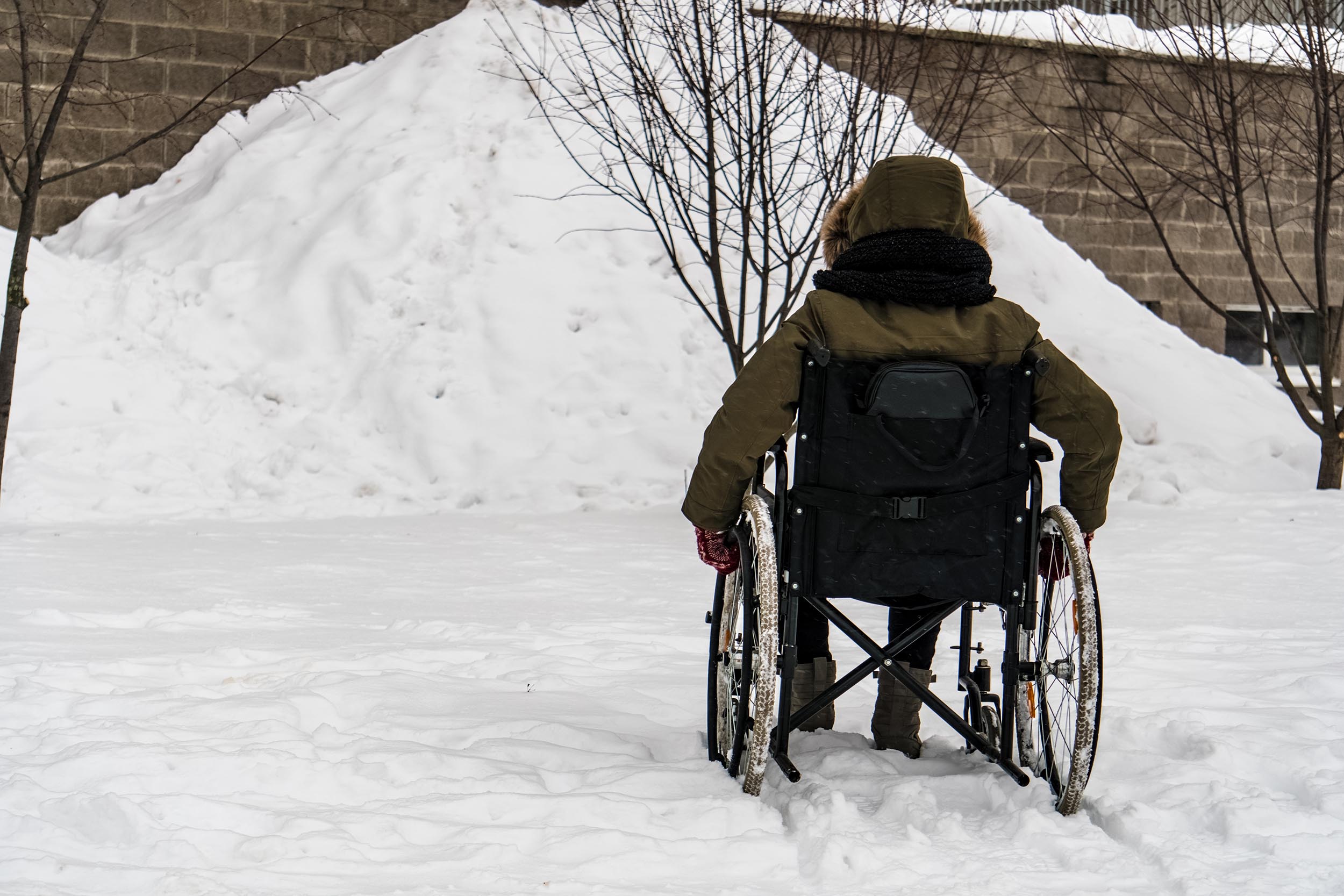
Standard wheelchair tires are often smooth (“slicks”), designed for low rolling resistance on linoleum or pavement. On Colorado ice, however, these act like sleds. To turn your mobility device into a safe winter wheelchair, traction is the first line of defense.
The “Knobby Tire” Upgrade
The most effective upgrade is swapping standard tires for knobby tires. Much like mountain bike tires, these have deep treads that bite into snow and slush to provide essential grip. This is particularly important for preventing “fishtailing” and sliding on sloped sidewalks, which can be terrifying for anyone who uses a wheelchair.
Instant Traction Solutions
If changing tires permanently isn’t an option—perhaps the user finds knobby tires too bumpy for indoor use—look for products like ReTyre or “snow skins.” These are modular skins that zip over your existing wheels to add instant traction without a trip to the mechanic.
A Note on Manual Chairs
For manual wheelchair users, the small front casters can easily get stuck in deep slush, creating a “pizza cutter” effect that halts the chair instantly. For those who use a manual wheelchair this can create undue anxiety.
- Caregiver Tip: If safe to do so, help the user pop a slight “wheelie” or tilt the chair back to keep the front wheels up while crossing unplowed patches. This keeps the momentum going and reduces anxiety.
The “Cold Zap”: Protecting Your Battery and Communication
Did you know that freezing temperatures can reduce a wheelchair battery’s range by up to 50%? The cold slows down the chemical reactions inside the battery, leading to the dreaded “cold zap.”
This is a significant safety issue, particularly for those individuals who rely on their power chair for total independence. If a battery dies in the cold, the user may be unable access their independence and to move to warmth.
Best Practices for Battery Care
- The “Every Night” Rule: Make charging a non-negotiable part of the nightly routine. Plug the chair in every single night, even if the gauge reads full. This can be a great routine-building exercise for those in Supported Living Services working on daily living skills.
- Insulation: If the chair is stored in a garage, try to bring the batteries inside or throw a heavy blanket over the battery casing to keep them warm.
- Lithium Warning: Never charge a lithium battery if it is physically frozen (below 32°F). This can permanently damage the cells. Always let the battery warm up to room temperature inside before plugging it in.
{Pop out: Manufacturer Compliance: Important: Always refer to your specific owner’s manual for charging instructions. Lithium batteries can be volatile if mishandled, so strict adherence to your manufacturer’s recommendations regarding temperature, chargers, and maintenance is essential for safety.}
Manufacturer Compliance:
Important: Always refer to your specific owner’s manual for charging instructions. Lithium batteries can be volatile if mishandled, so strict adherence to your manufacturer’s recommendations regarding temperature, chargers, and maintenance is essential for safety.
Winter Wheelchair Maintenance: Cleaning Off Mag Chloride
Colorado uses Magnesium Chloride (“Mag Chloride”) to melt ice clear the roads. While effective for cars, it is sticky, corrosive, and a nightmare for assistive technology including wheelchairs. If Mag Chloride gets into the joystick or motors, it can cause erratic behavior or sudden stops—which can be frightening and dangerous.
The Vinegar Hack
Plain water often isn’t enough to cut through this grime. Some manufacturers recommend mixing a solution of 50% water and 50% white vinegar in a spray bottle. Mist the tires and frame after every outing and wipe them down. The vinegar neutralizes the salts and protects the sensitive electronics.
Sensory Considerations
The smell of vinegar can be strong and pungent for some individuals with sensory sensitivities and the smell might be aversive.
- Modification: Perform this cleaning in a garage or separate room or visit a hardware store to find unscented salt-neutralizing sprays.
Dressing for the Season: Adaptive Clothing & Accessories
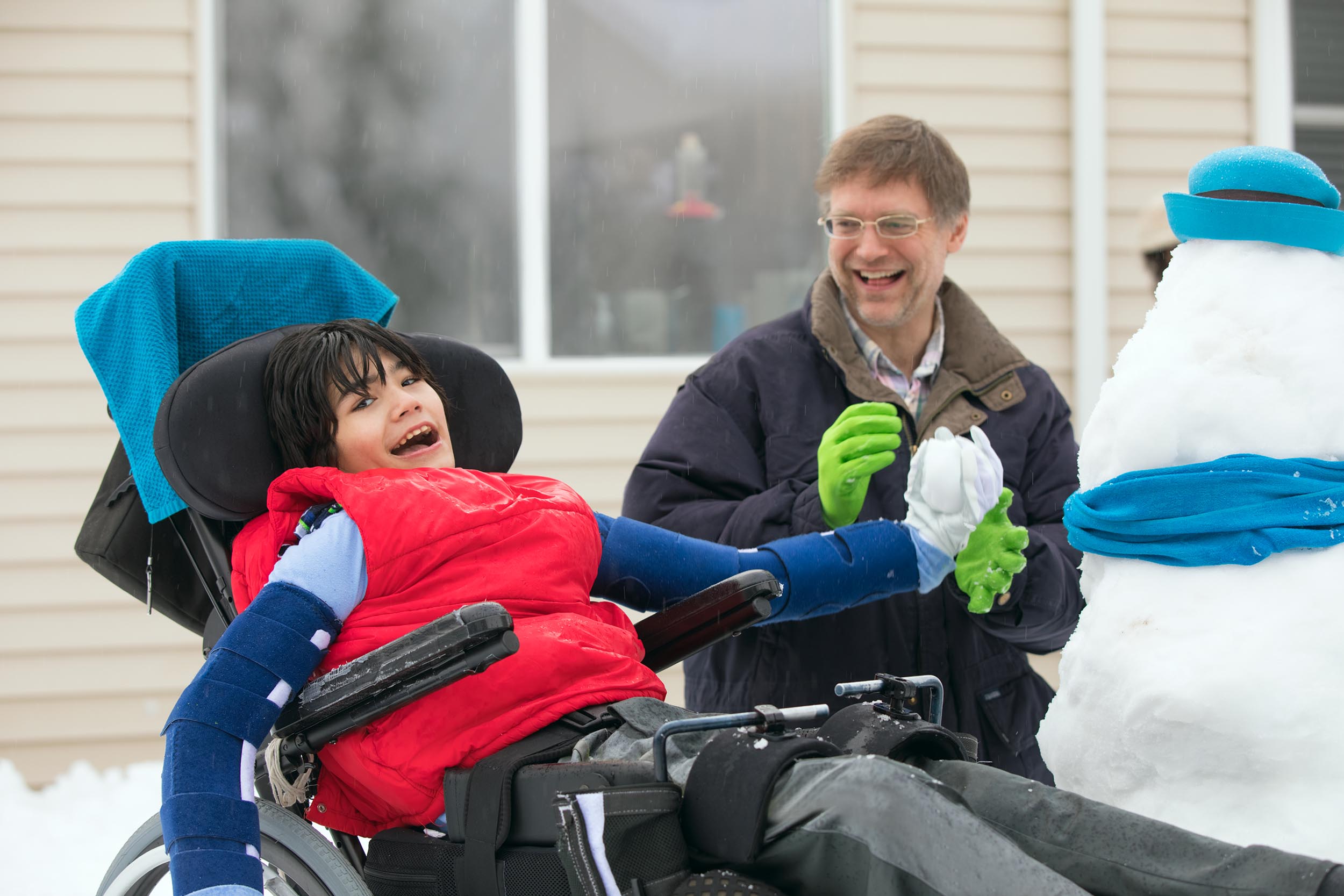
It is important to remember that sitting still generates very little body heat. A wheelchair user will feel much colder, much faster. It is incredibly important to dress appropriately for the weather conditions, like always in Colorado.
The Wheelchair Poncho
Standard coats can be bulky, and zippers can be difficult to manipulate. A specialized winter wheelchair poncho is often a better solution. These are designed to be shorter in the back (so they don’t get caught in the wheels) and longer in the front to cover the legs like a warm blanket. This ease of use is ideal for most who use a wheelchair.
Protecting Extremities
- Hands: For manual users, wet push-rims lead to freezing hands instantly. Waterproof gloves are essential.
- For Power Chair Users: Consider “pogies”—insulated mitts that attach directly to the joystick. This allows the user to keep their hands warm without losing the tactile feel of the controller. This is vital for users with Cerebral Palsy or other conditions affecting muscle tone, as cold hands can lead to slower reaction times on the joystick.
- Feet: Because circulation is often poorer in the legs for those with Down Syndrome or limited mobility, insulated, waterproof boots are non-negotiable to prevent frostbite.
Need help funding adaptive clothing or gear? Our Community Funded Programs may be able to point you in the right direction.
Visibility and Emergency Prep
Winter days are short, and visibility is often low due to snow and grey skies. Being seated puts a wheelchair user below the eye level of drivers, especially when snowbanks pile up on curbs. This poses a significant risk for any individual who may be navigating the challenges winter may bring in Colorado in a wheelchair.
Be Seen, Be Safe
- Lighting: Light up the chair with LED bike lights; flashing lights catch a driver’s eye better than solid ones.
- The Flag: Attach a tall, high-visibility orange flag to the frame. This ensures that even if the user is hidden behind a snow mound at a crosswalk, drivers can spot them.
The “Stuck Kit”
Prepare a simple backpack containing chemical hand warmers, a laminated card with emergency contacts, and a bottle of water. This small step adds a layer of safety if a pickup is delayed or a path is blocked. For families, creating this kit together can be a valuable activity to discuss safety planning.
Navigating Colorado Weather Safely
For some individuals with IDD who may use a wheelchair, winter requires extra planning support to avoid getting into unsafe situations.
Planning the Route
Before leaving the house, check online “plow maps” (available for many cities like Lakewood and Denver) to see which areas are prioritized for clearing. When choosing a route, stick to south-facing sidewalks whenever possible, as the sun will melt the ice on these paths much faster than on the north side.
The “Wait Rule”
Reinforce the “Wait Rule”: which is the concept that if a path looks covered in deep snow or ice, it is okay to wait for a ride or turn back. It is always better to be safe than stuck!
Need Support Getting Your Wheelchair Winter-Ready?
Navigating the seasons shouldn’t be a solo journey.
Contact DDRC today to speak with our team about how we can support you or your loved one in living a full, independent life year-round.